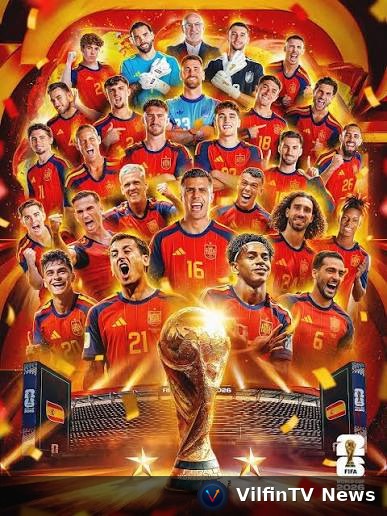
For 105 minutes, Emiliano Martínez looked like he might single-handedly rob Spain of the one trophy that has eluded them since 2010. Then, in the second period of extra time, a substitute nobody outside Spain was talking about at kickoff did what strikers dream of doing on the biggest stage in the sport: he found half a yard, met a header back across goal, and buried it.
Spain are World Cup champions again — 1-0 over Argentina at MetLife Stadium in New Jersey, in a final that had absolutely no business staying scoreless as long as it did.
The Goal Everyone Will Remember
It came in the 106th minute — deep into extra time, when legs are heavy and nerve is the only thing left running the show. Nico Williams rose to meet a ball at the back post and headed it back into the danger zone rather than trying to force it in himself. Waiting there was Ferran Torres, on as a substitute, who met it on the half-volley and sent it past Martínez before the Argentina goalkeeper could set himself.
One goal. One touch, really, if you don't count the assist. That's a World Cup final decided.
Ten Men and a Wall Called Martínez
The story of how Argentina nearly survived matters as much as how they didn't. Enzo Fernández picked up a second yellow card and was sent off, leaving Argentina to play more than half an hour of one of the biggest matches of their lives a man short. Down to ten, with Spain camped in their half, Argentina leaned entirely on their goalkeeper — and Martínez delivered a performance that will be talked about regardless of the result. Reports from the match put his save count at eleven, a new record for a World Cup final. Spain finished the match with 65% possession and twenty shots. Argentina managed two. If not for Martínez, this final would not have needed extra time at all — it might not have needed halftime.
Not Spain's First Rodeo — But a Different One
It's worth being precise here, because it's easy to blur two different Spanish triumphs into one memory: this is Spain's second World Cup title, not their first. Their first came in 2010 in South Africa, a tournament remembered for tight, low-scoring football and a single late Andrés Iniesta goal in the final against the Netherlands. Sixteen years later, the shirt number changes, the manager changes, half a generation of players changes — but the habit of winning football's biggest match by the smallest possible margin, apparently, does not. If you're going to compare the two triumphs, compare them as bookends of a footballing philosophy, not as the same story twice.
What It Means
For Argentina, this will sting in a specific way — not a blowout loss, not an off day, but a final they controlled defensively for over an hour with ten men before one moment of substitute-magic undid them. For Spain, it's confirmation that the patient, possession-heavy, wait-for-the-mistake style that won them 2010 still has a second gear when the stakes are this high — even when the opponent refuses to give them anything to work with for 105 minutes straight. Ferran Torres came off the bench to become a permanent answer to a pub-quiz question. Emiliano Martínez, for his part, leaves as the losing goalkeeper with the single greatest defensive final of anyone on the pitch that night — proof that in football, "best performance" and "winning performance" aren't always the same sentence.
Spain lift their second World Cup. Argentina lift eleven world-class saves and a lot of what-ifs. That's football at its cruelest and, honestly, its best.