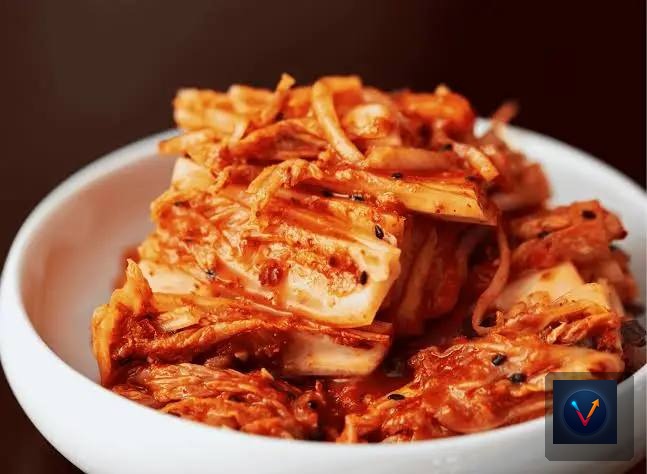
Close your eyes. Imagine walking through a narrow alley in Seoul, 3 AM. The air is thick with the sharp, garlicky, fermented punch of something that has been buried underground for six months — and the Koreans are lining up for it. Not running away. Lining up. This is not a gas leak. This is kimchi — the fermented soul of Korea, and quite possibly the most misunderstood superstar of the food world.
Some call it a side dish. Others call it a biological weapon if you open the fridge wrong. But the truth is far more extraordinary: this humble jar of buried cabbage has outlived dynasties, triggered international diplomatic crises, gone to space, and may actually be the reason Koreans look ten years younger than the rest of us. Let's dig in — literally.
The 3,000-Year-Old Jar That Started It All
The story of kimchi begins long before refrigerators, long before chili peppers, and long before anyone thought "hey, let's bury this cabbage and see what happens." It begins in the Three Kingdoms period of Korea — we're talking 57 BCE — when the Goguryeo people discovered something remarkable: if you salted vegetables and buried them in earthenware pots called onggi, they didn't just survive the brutal Korean winter. They transformed into something magical.
The Samguk Sagi, Korea's oldest historical record, mentions pickle jars used for fermenting vegetables. Even back then, Koreans understood what the rest of the world would take two millennia to figure out: fermentation isn't rotting. It's alchemy.
During the Silla dynasty (57 BCE – 935 CE), Buddhism swept across the peninsula, and with it came vegetarianism. Suddenly, pickled vegetables weren't just a winter survival strategy — they were the centerpiece of every meal. The word itself evolved from the ancient dihi to ji, and later from the Sino-Korean chimchae (沈菜 — literally "submerged vegetable") to the kimchi we know today.
But here's what nobody tells you: original kimchi was not spicy. Not even a little. No red. No heat. No burning sensation. It was white, mild, and salty — more like sauerkraut's sophisticated Korean cousin.
The Portuguese Accidentally Invented Red Kimchi
The fiery red kimchi that sets your mouth on fire? Blame the Portuguese.
Chili peppers are a New World crop — native to the Americas. They didn't exist anywhere in Asia until Portuguese traders, doing their global empire thing in the early 1600s, shipped them across the Pacific. The first mention of chili pepper in Korean records appears in the Jibong yuseol, an encyclopedia published in 1614.
But Koreans didn't immediately throw chilies into everything. It took nearly 200 years for chili peppers to become a standard kimchi ingredient. The red, spicy, sinus-clearing kimchi we know today didn't fully arrive until the 19th century. What the world considers "authentic" kimchi is actually younger than the steam engine.
And napa cabbage? The iconic vegetable of modern kimchi? It wasn't introduced to Korea until the end of the 19th century. Before that, kimchi was made with radishes, cucumbers, wild greens — anything that could survive the fermentation process. The whole-cabbage kimchi we Instagram today is basically a modern invention. Your great-great-grandparents wouldn't recognize it.
180 Shades of Fermented Glory
There are over 180 recognized varieties of kimchi. One hundred and eighty. That's more variety than most people have had hot dinners. Every region, every season, every family has its own version. And they're not just minor variations — these are fundamentally different dishes united only by the magic of fermentation.
Here are the icons you need to know:
The northern regions of Korea make kimchi with less salt, less chili, and no seafood — watery and mild. The southern provinces? They go hard: anchovy fish sauce, fermented shrimp, extra chili, the works. Geography literally shapes the flavour of a nation.
Make Your Own Kimchi — It's Easier Than Assembling IKEA Furniture
Before you run to the Korean grocery store, here's the truth: making kimchi at home is shockingly simple. It's messy. It stains your hands orange for two days. Your kitchen will smell like a garlic factory exploded. But the result? Worth every stained fingertip.
🥬 What You'll Need (for classic Baechu-kimchi):
👨🍳 The Process — Five Steps to Fermented Glory:
Step 1: The Salt Bath. Quarter the cabbage lengthwise, rinse, then pack salt between every single leaf. Yes, every leaf. Let it sit for 2-3 hours, flipping halfway. The cabbage will wilt from "crispy basketball" to "floppy yoga instructor." Rinse thoroughly — THREE times — or your kimchi will taste like the Dead Sea. Drain well.
Step 2: The Porridge. Mix rice flour with water in a small pot, heat until it thickens into a gluey paste. Add sugar. Let it cool. This isn't a snack — it's the binding agent that will carry all your seasonings onto every cabbage leaf. Think of it as edible adhesive. Delicious, spicy adhesive.
Step 3: The Seasoning Paste. Into a big bowl: the cooled rice porridge, gochugaru, minced garlic, grated ginger, fish sauce. Stir until it becomes a bright red, fragrant paste that makes your eyes water — from joy, or the chili fumes, or both. Add the julienned radish, carrot, and chopped green onions. Mix until everything is coated like it's going to a very spicy prom.
Step 4: The Rubdown. Put on gloves. Seriously. Bare hands + gochugaru = you will regret every life choice for the next 48 hours. Take each cabbage quarter and smear the red paste between every. Single. Leaf. Front and back. Every leaf needs love. Pack each quarter into a clean glass jar or airtight container, pressing down firmly to remove air pockets.
Step 5: The Waiting Game. Leave the jar at room temperature for 24-48 hours. You'll see bubbles — that's the Lactobacillus party starting. Taste it after a day. Want it funkier? Leave it longer. Then move to the fridge, where it will continue fermenting slowly for months. The flavor evolves — fresh kimchi is bright and crunchy, three-month-old kimchi is deep, sour, and complex enough to make French sommeliers weep.
🔥 Pro tip: "Burp" the jar daily during room-temp fermentation — loosen the lid to release carbon dioxide. Unless you want a kimchi grenade in your kitchen. Your ceiling will not forgive you.
Your Gut's New Best Friend — The Health Miracle
Here's where things get genuinely remarkable. Kimchi isn't just delicious. It is, calorie for calorie, one of the most nutritionally dense foods humans have ever invented.
A 100-gram serving of baechu-kimchi packs just 18 calories. Eighteen. That's less than a single bite of a chocolate bar. And yet within those 18 calories, you get dietary fiber, vitamin A, vitamin B1, B2, B6, vitamin C, calcium, iron, niacin, and folic acid. It's a multivitamin that tastes like a party.
The fermentation process itself is the secret weapon. As the vegetables break down, beneficial Lactobacillus bacteria multiply into the billions. These are the same probiotics people pay $40 a bottle for at health food stores. In kimchi? They grow naturally, for free, while the cabbage sits in your fridge minding its own business.
South Koreans consume approximately 1.85 million metric tons of kimchi annually — that's roughly 36 kilograms per person per year. The average Korean adult eats 50 to 200 grams of kimchi every single day. Some have even linked the "Miracle on the Han River" — South Korea's extraordinary economic rise — partly to the vitality provided by this national staple. When your entire workforce eats probiotics three times a day, good things happen.
The Dark Side: What Nobody Talks About
But let's not get carried away. Kimchi is not a magic potion. It has a dark side, and we need to talk about it — because nobody else will.
First: the sodium bomb. Kimchi is salty. Really salty. A significant portion of the average Korean's sodium intake comes directly from kimchi. If you have high blood pressure, kidney issues, or your doctor has told you to watch your salt — kimchi should come with a warning label, not just a nutrition label. A single generous serving can deliver more sodium than an entire fast-food burger.
Second: the gastric cancer link. This is the uncomfortable truth. Frequent, high-quantity kimchi consumption has been linked to an increased risk of gastric (stomach) cancer. South Korea has one of the highest rates of stomach cancer in the world, and while kimchi isn't the sole culprit — Helicobacter pylori infection, genetics, and overall diet play roles — the correlation is real and documented. The high salt content, combined with certain fermentation by-products in aged kimchi, may damage the stomach lining over time.
Third: the smell. Let's address the elephant — or rather, the fermented cabbage — in the room. Kimchi smells. It smells strong. It smells like something that has been fermenting for months underground, because that's exactly what it is. Koreans have special "kimchi refrigerators" with dedicated compartments and odor-sealing technology, because regular fridges cannot contain the aroma. If you eat kimchi at lunch, everyone in your 3 PM meeting will know. This is not a threat. This is a guarantee.
Fourth: the digestive fireworks. If your gut microbiome isn't used to fermented foods, introducing kimchi is like throwing a rave in your intestines. Gas, bloating, and urgent bathroom situations are common initiation rites. Start slow. Your coworkers will thank you.
Kimchi vs Indian Pickle (Achar): The Ultimate Fermentation Face-Off
Two Asian giants. Two ancient preservation traditions. Two completely different philosophies of flavor. Both deserve appreciation — preferably while eating way too much of each.
Kimchi and Indian pickle (achar) are often compared because both involve vegetables, both are spicy, and both will make your non-Asian friends ask "is your food... supposed to smell like that?" But beyond the surface, they are fundamentally different creatures. One is a living, breathing, evolving ecosystem of bacteria. The other is a time capsule preserved in oil.
The bottom line? Kimchi is a living food — dynamic, evolving, probiotic-rich, eaten in generous quantities. Indian pickle is a preserved masterpiece — stable, intense, oil-based, consumed in tiny explosive doses. One is a marathon runner. The other is a heavyweight boxer. Both will knock you out if you're not prepared.
North Indian vs South Indian Pickle: A Civil War in a Jar 🇮🇳
India doesn't have one pickle tradition. It has dozens. And the differences between North and South Indian pickles reveal more about India's diversity than any textbook ever could.
The Great Pickle Divide, summed up: A Punjabi grandmother will hand you a jar of mango achar swimming in mustard oil and say "beta, just a tiny bit." An Andhra grandmother will hand you avakaya and watch with quiet satisfaction as smoke comes out of your ears. Both love you equally. One just expresses it through more aggressive spicing.
And here's the beautiful twist — North Indian achar shares a surprising spiritual cousin in kimchi's fermented radish varieties like kkakdugi. The crunchy, spicy, radish-based kick? Universally understood across Seoul and Delhi alike. Food doesn't need a translator.
🌏 The Global Kimchi Map — Who's Eating All the Cabbage?
Kimchi is not just a Korean thing anymore. It has crossed borders, infiltrated menus, and colonized fridges worldwide. But the relationship each country has with kimchi is wildly different — from sacred national heritage to awkward imitator to mass-production powerhouse.
The fascinating part? South Korea's kimchi consumption is actually declining. Daily intake dropped from 109.9 grams per person in 2010 to 88.3 grams in 2020 — a nearly 20% decrease. Younger Koreans, seduced by Western fast food and convenience culture, are slowly drifting from the ancestral cabbage. Korean men still eat more kimchi (106.6g/day) than women (70g/day), but the generations-long love affair is cooling. The government has noticed — and they're worried.
Meanwhile, China churns out industrial quantities, Japan keeps making its controversial "kimuchi," North Korea preserves the old ways in isolation, and the West treats it as the next avocado toast. The cabbage that united a peninsula is now dividing global palates — and global politics. Not bad for something that started in a buried clay pot 3,000 years ago.
UNESCO, Space, and a Diplomatic Crisis Over Cabbage
Kimchi is not just food. It is a geopolitical instrument. The disputes over kimchi between South Korea, Japan, and China have been so intense they make trade wars look like playground squabbles.
In 1996, South Korea protested Japanese commercial production of "kimuchi" — a non-fermented, salad-like imitation that Koreans considered an insult to their cultural heritage. Korea successfully lobbied the Codex Alimentarius (the UN food standards body) to define kimchi officially as a fermented product, effectively telling Japan: "That's not kimchi. That's spicy coleslaw."
Then in 2020, China attempted to claim kimchi — or rather, its pickled vegetable precursor pao cai — as the original, sparking a furious internet war that trended globally. The Chinese argument? That Korea's kimchi was derived from Chinese pickles. The Korean response was, to put it mildly, not diplomatic.
Meanwhile, UNESCO stepped in and inscribed "Gimjang" — the tradition of making and sharing kimchi — on the Representative List of the Intangible Cultural Heritage of Humanity in 2013. North Korea followed with its own inscription in 2015. This is one of only two cultural practices submitted by both Koreas. The other is the folk song "Arirang." That's the level we're talking about.
In 2008, South Korean scientists developed "space kimchi" for Yi So-yeon, the country's first astronaut. A bacteria-free, radiation-safe version that wouldn't mutate in orbit. Because apparently, even in space, Koreans refuse to eat a meal without kimchi. And in 2010, when heavy rains destroyed cabbage crops, the price of kimchi ingredients skyrocketed — newspapers called it a national crisis. Some restaurants stopped offering free kimchi as a side dish, which The New York Times compared to "an American hamburger restaurant no longer offering free ketchup."
November 22 is officially Kimchi Day in California, Virginia, Maryland, New York, and Washington D.C. The fermented cabbage has conquered American state legislatures. What's next? The UN General Assembly?
The Soul in the Jar
Here's the thing about kimchi that data tables and UNESCO certificates cannot capture: it is love, buried in the ground, waiting to be shared.
The tradition of gimjang — the communal winter kimchi-making — was never just about food preservation. It was about women gathering, hands buried in chili paste, stories flowing, families bonding across generations. Mothers taught daughters. Neighbors helped neighbors. Entire villages would come together to prepare enough kimchi to last through the brutal Korean winter. The work was hard. The laughter was louder. The kimchi tasted like community.
Today, in an age of instant delivery apps and pre-packaged everything, there is something profoundly radical about a food that demands patience. You cannot rush kimchi. You salt it. You wait. You season it. You wait. You bury it. You wait some more. The microbes do their slow, invisible work, and when you finally open that jar — weeks or months later — you are rewarded with something that tastes like time itself. Tangy. Deep. Alive.
Imagine a world where every meal comes with a small plate of fermented wisdom. Where the bacteria in your food are your allies, not your enemies. Where a jar of buried cabbage connects you to 3,000 years of human ingenuity, Portuguese trade routes, Confucian family values, space-age science, and the stubborn, beautiful refusal of a people to let their culture be diluted.
That's kimchi. Not a side dish. A legacy in a jar.
So the next time you open your fridge and that unmistakable fermented punch hits your nose — don't recoil. Lean in. That's the smell of history. That's the smell of a nation's soul, patiently waiting to be eaten.
Pass the chopsticks. 🥢
⚠️ Disclaimer: This article is for informational and entertainment purposes only. Kimchi, like all fermented foods, affects individuals differently. Those with hypertension, kidney conditions, stomach ulcers, or a history of gastric cancer should consult a healthcare professional before adding high-sodium fermented foods to their diet. Start with small portions. Don't eat kimchi that smells or looks "off." And please — warn your roommate before you open that jar. The information presented is based on publicly available research and historical records. No cabbages were harmed in the making of this article. Well, actually, many were. But they died for a noble cause.