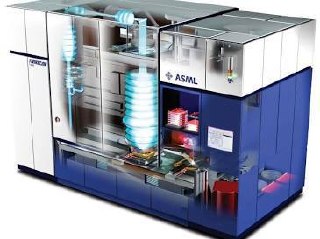
For twenty years, making the world's most advanced computer chips meant picking up the phone and calling one company. One company, in one small Dutch town, that had figured out something nobody else could. If they said no, you had nowhere else to go.
This week, China stopped asking.
A Shanghai factory has begun churning out homegrown lithography machines — the towering, room-sized equipment that prints microscopic circuit patterns onto silicon wafers, the foundation of every processor, memory chip, and smartphone brain on the planet. Five of them roll out this year. Twenty more next year. And for the first time, China's biggest chip manufacturers have a domestic option.
The machines come from Shanghai Yuliangsheng Technology, a startup with close ties to Huawei. They have been running test wafers inside SMIC — China's largest chip foundry — since last September. The decision just landed: these things are ready.
Here is why this matters.
Lithography is the hardest part of making chips. Think of it as the world's most precise stencil. A laser fires through a mask, and the pattern shrinks down onto a silicon wafer at a scale so tiny that a single speck of dust would look like a boulder. If you cannot do lithography, you cannot make advanced chips. Period.
For decades, only one company truly mastered it: ASML of the Netherlands. Their machines are engineering miracles — the best one blasts through over 310 wafers every hour at 7-nanometer precision. That is the width of about 35 atoms. ASML shipped 131 of these machines just last year.
China's new machine is not in that league. Not yet. It handles 28-nanometer chips in a single pass — mature technology, the kind that powers cars, factory equipment, and industrial sensors. But here is the trick. By printing the same layer multiple times, shifting the pattern fractionally with each pass, engineers can push it down to 7 nanometers. Some think it can even reach 5.
The yields will be lower. The speed will be slower. But the machine works. And when your alternative is hoping that Washington does not tighten the screws even further, a machine that works — even imperfectly — is worth its weight in silicon.
The first machines are heading to three companies at the core of China's chip ambitions: SMIC, Hua Hong Semiconductor, and CXMT, the memory chip maker whose recent public listing drew a flood of investor money.
Now, the part Washington does not want you to miss.
The United States government specifically banned ASML from selling its most advanced machines to China. Not just the bleeding-edge EUV systems — those were blocked first — but also the DUV immersion tools that make up the backbone of modern chip production. The ban was not a suggestion. It was a legal wall. The Dutch government, under American pressure, enforced it. ASML, a Dutch company, had to comply. China's chipmakers were cut off from the one supplier that controlled the entire global market for advanced lithography.
Washington's logic was cold and clear: cut the supply line, strangle the capability, and China's semiconductor ambitions die on the vine.
Beijing did not die on the vine. It spent tens of billions of dollars building an entire domestic supply chain from scratch — silicon, chemicals, gases, optics, lasers, and at the very top, the machines that stitch it all together. This week, one of those bets paid out. The ban that was supposed to stop China instead forced China to build its own. The strategy worked. Just not in the direction Washington intended.
Now Wall Street is doing the math, and the results are spreading fast.
ASML shares dropped between four and seven percent within hours of the announcement. That was the most obvious hit — the Dutch giant just watched its largest captive customer start building an escape hatch. But the damage did not stop there. Applied Materials fell. Lam Research fell. KLA Corporation fell. Tokyo Electron, the Japanese equipment giant, took a hit. The entire semiconductor equipment sector shuddered because every one of these companies has been selling into China's chip-building boom for years, and every one of them just saw a future where those sales start shrinking.
For the broader semiconductor stock universe — the chip designers, the manufacturers, the equipment suppliers — this announcement rewrites a core assumption. The assumption was that China would always need Western tools. That the bans would hold. That ASML's monopoly was a permanent feature of the landscape, not a temporary one. If that assumption cracks, valuations across the entire sector get recalculated.
VilfinTV Outlook: Semiconductor Stocks and ETFs
So where does this leave investors?
The semiconductor sector is not a monolith. Different players face different levels of exposure to China's new DUV reality. Here is how the landscape breaks down.
Most exposed — Equipment makers: ASML, Applied Materials, Lam Research, KLA, and Tokyo Electron are directly in the firing line. China has been their fastest-growing market for years. A domestic Chinese alternative, even a slower one, chips away at future revenue. ASML is protected by its EUV monopoly — no Chinese machine touches that for years — but the DUV segment is a meaningful slice of its business. For Applied Materials and Lam Research, which sell etching, deposition, and inspection tools that pair with lithography systems, a Chinese lithography ecosystem eventually pulls demand for their own products onto domestic alternatives too. These stocks will trade at a discount as long as China's self-sufficiency push accelerates.
Caught in the middle — Global foundries: TSMC and Samsung sit in a strange position. They do not compete directly with SMIC's 28-nanometer mature-node business, and they remain years ahead on advanced nodes. But a stronger SMIC eventually becomes a competitor for global orders at the mature and mid-range nodes where pricing is already brutal. The immediate risk is low. The five-to-ten-year risk is real.
Potential beneficiaries — Chinese semiconductor stocks: SMIC, Hua Hong, CXMT, and China's domestic equipment ecosystem stand to gain if the homegrown machines prove viable. Reduced dependency on foreign tools lowers geopolitical risk and potentially lowers costs over time. But caveats apply: the machines are unproven at scale, yields are unknown, and the timeline to meaningful volume stretches into 2027 and beyond. This is a long-term thesis, not a next-quarter trade.
Semiconductor ETFs — What to Watch:
Our take: The immediate sell-off in semiconductor equipment stocks is a rational reaction to a genuine long-term threat, but it is also an overreaction in the near term. Five Chinese DUV machines in 2026 do not replace ASML's 131. The technology gap is real, and closing it will take years. However, the direction is now locked in. Investors with a three-to-five-year horizon should watch for two signals: first, whether SMIC and Hua Hong report acceptable yields on these domestic machines by mid-2027, and second, whether Washington escalates with a total ban on remaining Japanese component exports. If Chinese machines prove viable and Washington doubles down on restrictions, semiconductor equipment ETFs with heavy ASML and Applied Materials weight could face sustained pressure. On the flip side, a diversified tech ETF like FTEC offers insulation. And for those willing to bet on China's trajectory, domestic Chinese semiconductor stocks reward patience — but the ride will be volatile.
Conclusion
The semiconductor industry has lived under one unshakable truth for two decades: if you want to print advanced chips, you buy from ASML. There was no second option. The United States turned that monopoly into a weapon, banning exports to China with the expectation that Beijing's chip ambitions would suffocate without access to the one company that mattered.
This week, China answered. Not with a press release or a policy paper, but with a working machine rolling off a Shanghai production line. It is slower. It is less precise. It is a fraction of what ASML builds. But it exists. And in geopolitics, what exists today always becomes better tomorrow.
The ban did not kill China's chip industry. It gave China the only thing more powerful than access to foreign technology — the motivation to build its own. Five machines in 2026. Twenty in 2027. An ecosystem of domestic suppliers, state funding, and relentless iteration behind them. ASML's throne is not vacant. But for the first time, someone else is in the room.
Investors should not panic. They should pay attention. The semiconductor sector is entering a new chapter where the old certainties — Western dominance, Chinese dependence, eternal ASML monopoly — no longer hold as absolute truths. The companies that adapt to a world with two lithography suppliers will thrive. The ones that assume the old world lasts forever will be left explaining to shareholders why their biggest customer stopped calling.
Disclaimer
This article is for informational and educational purposes only. It does not constitute investment advice, a recommendation, or an offer to buy or sell any security. Stock market investments are subject to market risks. Past performance does not guarantee future results. VilfinTV and its authors are not registered investment advisors. Readers should conduct their own research and consult a qualified financial advisor before making any investment decisions. All data and analysis presented are based on publicly available information as of the publication date and may change without notice.