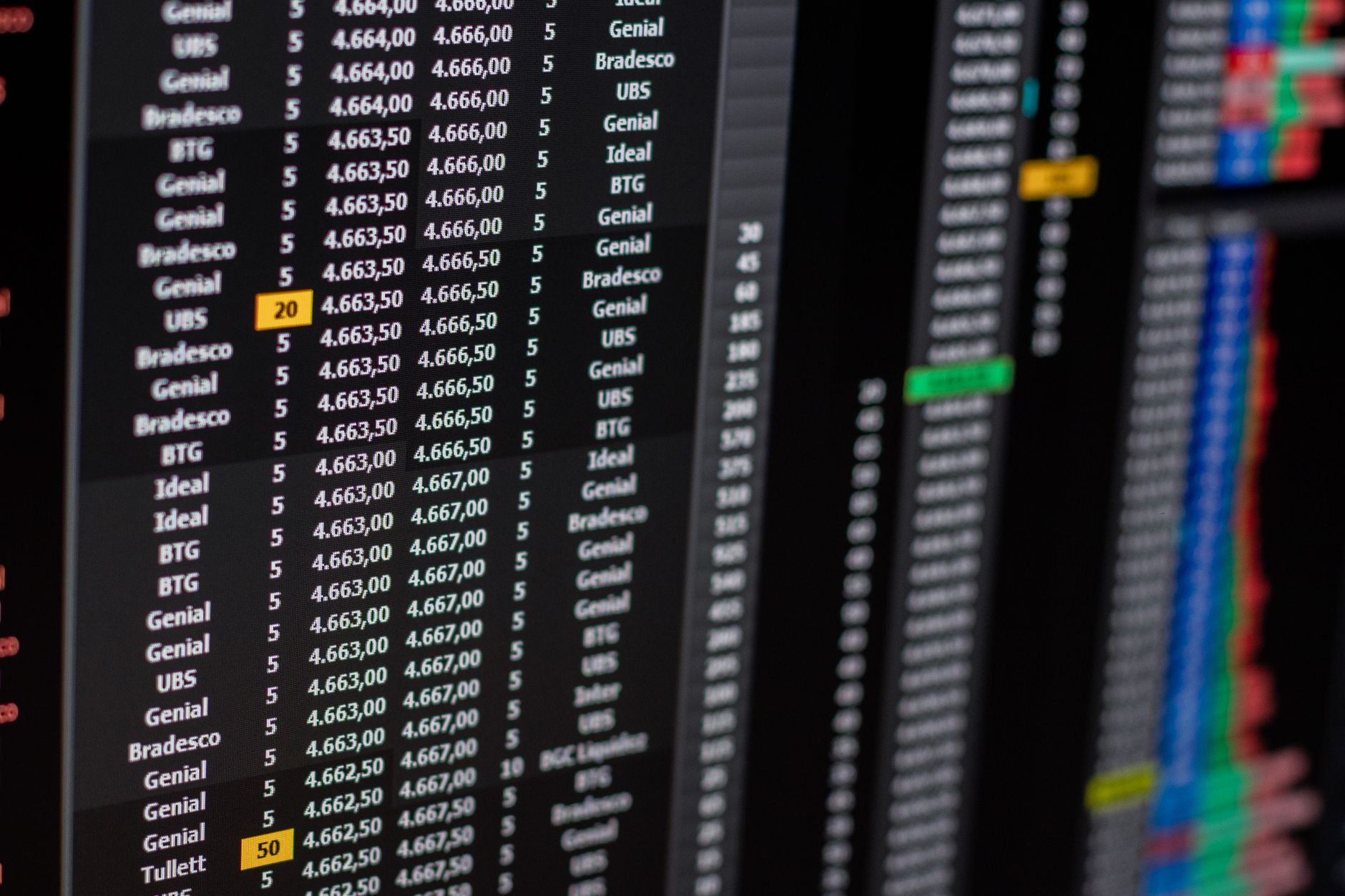
⚡ August 3, 2026, 3:28 PM. Something strange happened on India's biggest stock exchange. In the final minutes of trading, the Nifty 50 — India's flagship market index — surged nearly 200 points. Traders stared at their screens in disbelief. The Sensex, meanwhile, barely moved. Same market. Same stocks. Completely different numbers. This was not a crash. Not a crisis. It was the first day of India's biggest stock market rule change in decades — and almost nobody had explained it to ordinary investors.
🏛️ First, Meet the Two Giants Running India's Stock Market
If you have never bought a single share in your life, start here. India has two major stock exchanges — two giant marketplaces where people buy and sell ownership in companies.
The first is the BSE (Bombay Stock Exchange). It was founded in 1875 — making it the oldest stock exchange in all of Asia. It sits in Mumbai, the financial capital of India. Its famous index is the Sensex, which tracks the 30 largest and most actively traded companies on BSE. When people say "Sensex is up 500 points," they mean those 30 companies are collectively worth more today than yesterday.
The second is the NSE (National Stock Exchange of India). Founded in 1992, it is younger — but today it is India's largest stock exchange by the sheer volume of trades happening daily. Its flagship index is the Nifty 50, which tracks the top 50 companies. NSE was the exchange that brought fully electronic trading to India, replacing the old system of brokers shouting at each other across a trading floor.
Think of BSE and NSE as two competing supermarkets selling the same groceries. Most big Indian companies are listed on both. Millions of Indians buy and sell shares through both, using apps like Zerodha, Groww, or Paytm Money. The prices are usually nearly identical — but not always, as August 3rd dramatically showed.
Above both of them sits SEBI (Securities and Exchange Board of India) — the government body that writes the rules both exchanges must follow. SEBI is to Indian markets what a traffic police department is to roads: it sets the rules, investigates violations, and occasionally issues sweeping new regulations that change how everything works. It was SEBI that issued the order for this new rule — back in January 2026.
🕒 The Old Rule: How India's Stock Market Used to Decide a Closing Price
Every evening, markets "close." But what does that actually mean? When trading stops at 3:30 PM, every stock needs one final, official number — its closing price. This number matters enormously. Mutual funds use it to calculate the value of your SIP. Futures contracts use it to settle profits and losses. Newspapers print it. It is the score at the end of the match.
Before August 3, 2026, India used a system called VWAP — Volume Weighted Average Price. It sounds complicated. It is not. Here is the idea: take every single trade that happened in the last 30 minutes of the session (between 3:00 PM and 3:30 PM), weight each trade by how many shares were involved, and calculate an average. That average becomes the official closing price.
VWAP is a reasonable system — but it had a well-known flaw. Suppose a very large player — say, a big foreign fund or a wealthy trading desk — executes a massive buy or sell order at an unusual price right at 3:28 PM. Because VWAP weights by volume, that one giant trade can pull the average significantly. The official closing price shifts. And in financial markets, a shifted closing price can mean profits worth crores to whoever caused the shift.
This tactic even has a name: "marking the close." SEBI had been watching it for years. In January 2026, they finally acted.
🔔 The New Rule: India's Closing Auction Session (CAS)
SEBI studied how the world's best stock exchanges — the New York Stock Exchange, the London Stock Exchange, Euronext in Europe, the Singapore Exchange — all determine their closing prices. Every single one of them uses the same method: an auction.
An auction, unlike a continuous market, collects all buyers and sellers together, then finds the single price at which the maximum possible number of shares can be traded. It is a fairer, more transparent system. India just joined this global standard. The new mechanism is called the Closing Auction Session (CAS).
It applies to stocks that have active Futures & Options (F&O) contracts. These are called Category I stocks — currently around 200+ companies including all Nifty 50 stocks. Stocks without F&O contracts (Category II) continue with the old VWAP method for now.
🗓️ How the New Closing Timeline Works — Step by Step
📊 Old Rule vs New Rule — Side by Side
| Feature | Old System (Pre Aug 3) | New System (CAS, Aug 3+) |
|---|---|---|
| Closing Price Method | VWAP (average of last 30 min trades) | Equilibrium auction price |
| Normal Trading Ends | 3:30 PM | 3:15 PM |
| Intraday Auto Square-Off (approx.) | ~3:25 PM | ~3:05–3:10 PM (earlier!) |
| F&O Segment Closing | 3:30 PM | 3:40 PM (+10 min) |
| Manipulation Resistance | Low — one large trade skews average | High — pooled orders, single price |
| Applies to | All stocks | F&O stocks only (Category I) |
| Used by Global Exchanges? | No (India was an outlier) | Yes — NYSE, LSE, Euronext, SGX |
👥 What Does This Mean for You? (By Investor Type)
💼 Long-Term / SIP Investors
Virtually no change to your daily routine. Your closing price is now calculated differently — but you never look at it anyway. Your SIP continues buying on schedule. If anything, the price you buy at is theoretically more accurate and harder to game. Sit back, relax.
⚡ Intraday Traders (MIS / BO Orders)
The biggest impact here. Your positions in F&O stocks are automatically closed roughly 15–20 minutes earlier than before — around 3:05–3:10 PM depending on your broker. You have a shorter window to trade. This is not optional. If your position is still open at that time, the broker closes it for you, at whatever price is available. Check your specific broker's auto square-off time immediately.
📈 Futures & Options (F&O) Traders
You actually get more time. Derivatives themselves now trade until 3:40 PM instead of 3:30 PM. On expiry days, the final settlement price will now come from the CAS equilibrium price — which is meant to be cleaner and harder to manipulate. But be cautious: the closing price of the underlying stock locks in by 3:35 PM, and your options will reprice against that. Day-one reports showed some options did not reprice cleanly — monitor your positions carefully around close.
📊 Mutual Fund / ETF / Index Fund Investors
Your NAV (Net Asset Value — the daily value of your mutual fund units) will now be calculated using CAS-derived closing prices. These prices are expected to be more accurate and consistent. For Nifty and Sensex index trackers especially, this should reduce "tracking error" — the small gap that sometimes forms between the fund's returns and the actual index's returns.
🎭 The Drama of Day One: Nifty Surged 200 Points. Sensex Did Not.
Back to that stunned August 3rd scene. The new auction session opened. Buyers and sellers placed their orders. And when the equilibrium price was struck on NSE, the Nifty 50 jumped approximately 200 points — a 1.6% move — in the closing auction alone. The Sensex on BSE? Barely budged. 0.70%.
How? NSE and BSE run separate order books for this auction. The exact same stock can have more buyers on one exchange than the other. On August 3, NSE had a surge of buy orders piling into the auction window — enough to push the equilibrium price significantly higher. BSE's auction was more balanced. Same companies, two different closing prices.
NSE issued a statement the next morning: "The Closing Auction Session worked as intended." The divergence was not a bug. It was price discovery doing exactly what it is supposed to do — reflecting where genuine supply and demand stood on each exchange. Analysts called the 200-point move an "aberration" and predicted the two exchanges would converge over time as traders learn to spread their orders across both.
On August 4, the divergence continued in the opposite direction: Nifty fell 0.58% while Sensex rose 0.25%. The market is still learning. So are the traders. So is the system.
✅ What Gets Better: The Case for CAS
Manipulation becomes much harder. Under the old VWAP system, "marking the close" — artificially pushing a stock price in the final minutes — was a known tactic. With CAS, manipulating the equilibrium price requires buying or selling against a pooled book of every market participant at once. The sheer size of opposing orders makes it far more expensive and risky.
Better price discovery. The equilibrium price is not an average of random trades. It is the mathematically "correct" price at which the maximum number of shares can change hands. It reflects genuine supply and demand more accurately.
F&O and cash markets finally align. One of the long-standing headaches in Indian markets was that futures prices and stock prices would sometimes drift apart near close because the two segments closed at different effective times. CAS closes the gap: cash market price locks at 3:35 PM; F&O has until 3:40 PM to react. Clean and logical.
India joins the world's best exchanges. NYSE's closing auction happens every day at 4:00 PM US Eastern time. London Stock Exchange does the same. Singapore too. Until August 3, India was one of the last major markets using a raw average. That chapter is over.
⚠️ What Critics Are Saying: The Other Side of the Story
Not everyone is celebrating. Traders on forums and in broker Q&A threads have raised real concerns — and some of them deserve attention.
The two-exchange problem. The NSE-BSE price divergence on day one alarmed many. If two separate order books regularly produce meaningfully different closing prices for the same stock, arbitrageurs will exploit that gap — and ordinary investors may get caught in between. This is a genuine structural issue that regulators and exchanges will need to address.
Thin stocks are vulnerable. For smaller F&O stocks with low trading volumes, the entire closing auction might have just a handful of orders. The "equilibrium price" in that case reflects the wishes of a tiny group — arguably less representative of true market value than the 30-minute VWAP was.
The early-mover advantage. On day one, seasoned proprietary trading desks reportedly placed sell orders at elevated prices in the auction window. Institutional fund managers who needed to buy were left with limited choices. Some observers noted that well-capitalised, tech-savvy desks have an inherent edge in the early days of any new mechanism — before smaller participants learn its rhythms.
Options didn't reprice cleanly. Several F&O traders reported that their options contracts did not reflect the post-CAS cash price smoothly on August 3. Zerodha said it would collect data and escalate to regulators if problems persisted. Early days, but worth watching.
The shorter trading window. Intraday traders simply have less time to work with. Whether that is a net positive (reducing late-day gambling) or a net negative (reducing liquidity and opportunity) is still being debated. But the squareoff window moving 15–20 minutes earlier is an undeniable change that many traders are scrambling to adjust to.
🔭 What's Coming Next: Phase 2 on September 7, 2026
CAS is not a one-time change. SEBI has outlined a Phase 2 of this reform, tentatively scheduled for September 7, 2026. Details have not been fully released, but the direction suggests extending auction-style mechanisms to the opening session as well — similar to how NYSE runs both a morning opening auction and a closing auction each day. Watch for SEBI and NSE circulars in the coming weeks.
The broader vision is clear. India's regulators want a market that is world-class in structure, not just in scale. The Closing Auction Session is the first building block. A morning auction would complete the architecture.
🔑 Conclusion: The Closing Bell Just Got a Lot More Interesting
For decades, India's stock market closed the same way every single day: a quiet mathematical average, calculated behind the scenes, with no ceremony. On August 3, 2026, that changed. The closing bell now triggers a live auction — five minutes of concentrated price discovery that determines what every major Indian stock is officially worth.
For most ordinary investors, this is good news. Your SIP runs the same. Your mutual fund gets a cleaner price. Manipulation of closing prices becomes harder. India joins the company of the world's most sophisticated exchanges.
For active traders, it demands adaptation. Earlier square-off deadlines. New auction dynamics to understand. A brief window of early-mover advantage for well-capitalized desks that will take time to flatten out. The first week has been messy — that is normal for any structural overhaul of this scale.
The markets will adjust. The traders will learn. And the Nifty 50 will ring its closing bell every evening — just a little differently now. This time, India has set the clock right.