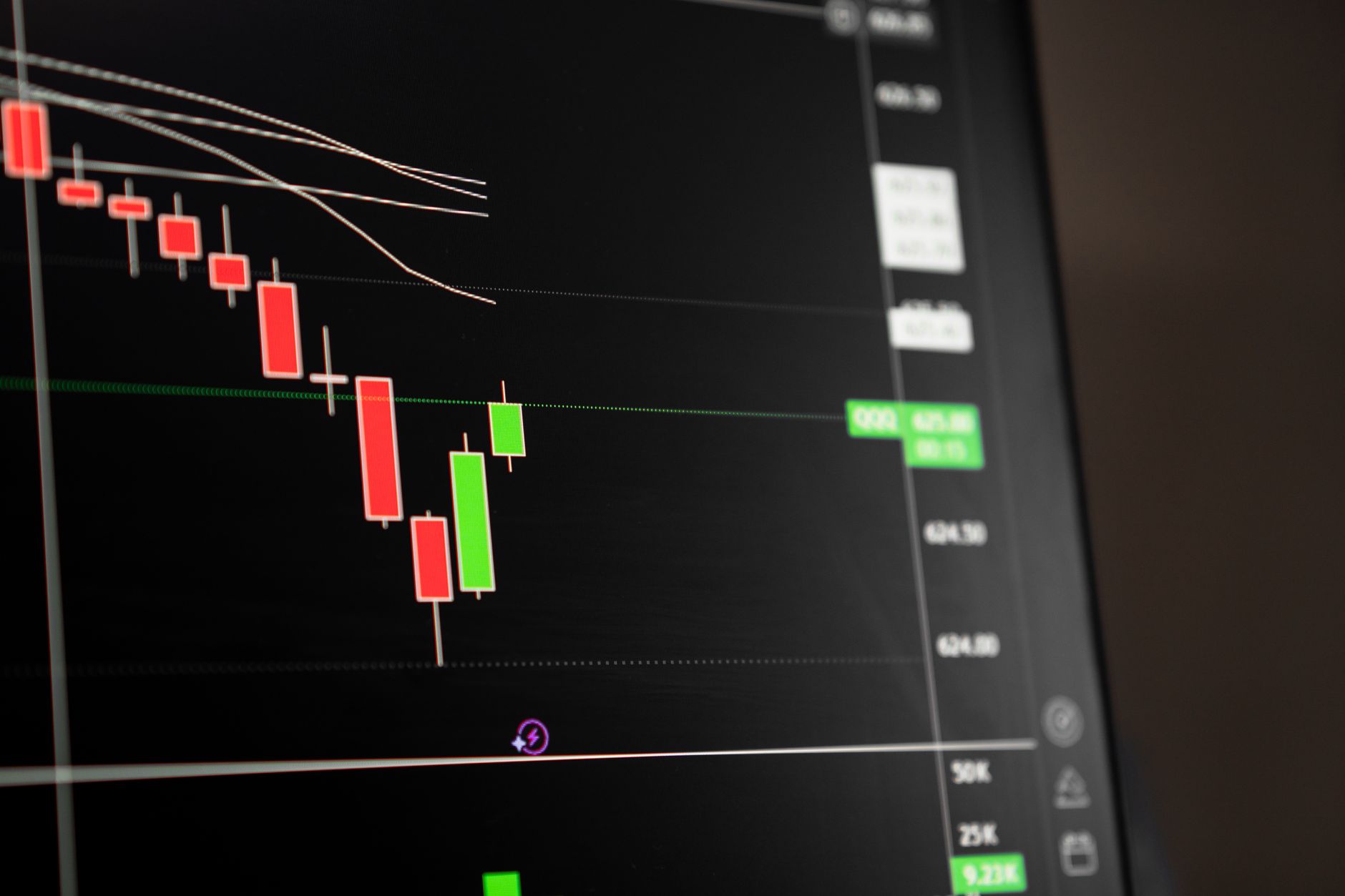
It is the third week of August 2026. Three trading desks — in New York, Tokyo, and Seoul — are celebrating. Their screens are green. Portfolio managers are ordering lunch with a smile.
Across the globe, in Mumbai, the mood is quieter. Not panicked. Not crashing. Just... waiting. The Nifty 50 has drifted 8% below its 52-week peak. Foreign money is flowing out. Earnings are sluggish. And a nagging question hangs in the air:
"Should I buy what's already running — Japan, Korea, America? Or should I buy what's still sleeping — India?"
This is the oldest, most important question in all of investing. And in August 2026, it has never felt more urgent — because the gap between global markets has never been wider.
Let us break this down, step by step, with real numbers, real examples, and a map for the next decade.
The Scoreboard: Where Every Market Stands Today
Here is live market data — the actual year-to-date returns for each major index from January 1 to August 18, 2026. This is how much you would have made (or lost) if you had invested on New Year's Day:
Let those numbers sink in. Korea is up 63% in just eight months. Taiwan is up 61%. Japan is up 34%. The US S&P 500 is near its all-time high. And India? The Nifty 50 is actually down 7.37% in 2026. Not flat. Not slow. Negative. An Indian investor who put money in the Nifty on January 1st has lost money this year — while their neighbour who put money in a Korea fund has nearly doubled it.
This is the starkest global divergence in years. And it raises the question louder than ever: should you chase the winners, or is this India's biggest buying opportunity in a decade?
The gap is striking. But before you rush to move money, you need to understand why each market is where it is.
First: What Is a Stock Market Index? (The Two-Minute Explainer)
A stock market index is a scorecard. It tracks a basket of the biggest, most important companies in a country and tells you, in one number, whether that country's corporate sector is growing or shrinking in the eyes of investors.
- S&P 500 = 500 largest US companies — Apple, Nvidia, Microsoft, Amazon, Tesla
- Nikkei 225 = Japan's 225 biggest companies — Toyota, Sony, SoftBank, Keyence
- KOSPI = Korea's entire stock exchange — Samsung, SK Hynix, LG Electronics
- Nifty 50 = India's 50 largest companies — Reliance, TCS, HDFC Bank, Infosys
When we say "India is lagging," we mean the average of India's top 50 companies has not grown as fast as Japan's or America's top companies over the past year. India is not failing — others are temporarily running faster. Like a marathon where India is running at a steady 9 km/h and Japan is suddenly sprinting at 15 km/h. The question is: will India pick up pace, or should you run alongside Japan?
The Three Winners: What Powered Them?
🇺🇸 United States — The AI Empire
The S&P 500 is essentially at its all-time high. What drove this? One word: AI.
Nvidia — the company that makes chips that power artificial intelligence — grew from a $500 billion company into a multi-trillion dollar giant in just two years. Microsoft embedded AI into every product it sells. Google, Amazon, Meta — all pouring hundreds of billions into AI infrastructure. When the companies that power the global economy are growing profits at 20-30% annually, their stock prices follow.
Add the Federal Reserve cutting interest rates (cheaper borrowing = more corporate investment = higher stock prices), and you have the recipe for a sustained bull market. The US did not just survive 2025's global turbulence — it thrived through it.
🇯🇵 Japan — The Corporate Awakening
Japan's Nikkei 225 staged one of the most dramatic reversals in modern market history — from a 52-week low of 41,835 to 67,513 today. To understand why, you have to understand Japan's corporate culture problem.
For decades, Japanese companies sat on mountains of idle cash. They refused to pay dividends, refused to buy back shares, refused to invest aggressively. The Tokyo Stock Exchange got fed up and issued a mandate in 2023-24: improve your Return on Equity, or face consequences. Think of it like a hotel that keeps 300 rooms permanently empty "just in case." The TSE told these hotels: fill the rooms or we'll move you to a worse listing.
Companies listened. Buybacks surged. Dividends rose. Warren Buffett placed famous bets on Japanese trading houses — and when Buffett buys, the world notices. The yen stayed weak, making Japanese exports cheap globally. The result? A market that woke up after 30 years of sleep and remembered it had decades of catching up to do.
🇰🇷 South Korea (and Taiwan) — The Chip Supercycle
Korea's KOSPI is up 63% year-to-date. Taiwan's benchmark index is up 61%. These are not small-cap speculative plays — these are entire national stock markets, moving like single stocks. The reason: HBM chips and the AI semiconductor supercycle.
Korea's KOSPI had a brutal crash in late 2024 when President Yoon Suk-yeol's sudden martial law declaration triggered a political crisis, wiping out a year's gains overnight. It looked like a disaster. But the underlying technology story was untouched — and the market roared back with a vengeance.
HBM stands for High Bandwidth Memory. It is the ultra-fast memory that every AI chip needs to function. Nvidia's AI processors are essentially useless without it. And who makes the world's best HBM? Korea's SK Hynix — holding a near-monopoly on the highest-grade chips. Meanwhile, Samsung is fighting back with its own AI chip innovations.
Every AI server installed in America, Europe, or Japan contains Korean-made memory. The AI boom happening in the US is simultaneously a chip boom happening in Korea. When the world buys a Nvidia GPU, part of that money flows to Seoul.
Why India Is the Laggard Right Now
India's Nifty 50 is down 7.37% year-to-date in 2026 — sitting at 24,201 while the rest of Asia celebrates. Nothing catastrophic happened. But several headwinds hit at once, all pointing in the same direction.
The Macro Reasons (Big Picture)
The Strong Dollar Problem. When the US dollar strengthens, foreign investors pull money out of emerging markets like India and park it in safer, higher-yielding US assets. This is called capital flight. Imagine your neighbourhood bank offers 5% interest, and a foreign bank suddenly offers 5.5%. Deposits quietly move. That is what Foreign Institutional Investors (FIIs) — the big global funds — did with Indian stocks. They sold, consistently, for months.
The Valuation Hangover. In 2024, India's Nifty was trading at a Price-to-Earnings (P/E) ratio of 22-24x. P/E is how much you pay for every ₹1 of company profit. At that level, India was priced as a premium market — expensive relative to peers. When global turbulence hit, expensive markets fall first. Investors sold India to buy cheaper opportunities elsewhere.
Earnings Disappointment. India's corporate earnings grew slower than expected in FY2025. FMCG companies, some auto makers, mid-tier banks — all reported muted numbers. When profits don't grow as fast as stock prices, the market corrects itself downward. This is not a crisis; it is healthy. But it stings in the short term.
The Micro Reasons (Company Level)
No AI Champion in the Nifty — Yet. While the US has Nvidia and Korea has SK Hynix, India has no market-listed AI semiconductor company. India's tech giants — TCS, Infosys, Wipro — are service companies. They write software for others. They benefit from AI gradually (more contracts, better tools) rather than explosively (a chip the whole world needs). Their stock prices move slowly.
Rural Stress. India is fundamentally a consumption economy. When rural incomes are under pressure — from uneven monsoons or high food inflation — FMCG companies like HUL, Britannia, and Dabur see slower sales. These companies are a meaningful slice of the Nifty 50.
Rupee Weakness. A weaker rupee makes imports costlier, squeezing corporate margins. It also means foreign investors earn less when converting Indian returns back to dollars — making India a less attractive destination for global capital, at least temporarily.
Macro vs. Micro: The Two Engines Behind Every Market Move
Before we go further — a clear explainer on two terms that explain almost everything about why markets move.
Everything that affects the whole economy — interest rates, inflation, GDP growth, currency, trade policy, government spending. You cannot control it, but you must plan around it.
- RBI cuts rates → cheaper loans → companies expand → markets rise
- US dollar strengthens → FIIs sell India → Nifty falls
- India GDP grows 6.5% → global funds get excited → FII buying returns
Individual company performance — revenue, margins, market share, management, new products. A great economy can still have lagging stocks if companies underperform.
- TCS wins a mega AI contract → TCS stock surges → Nifty nudged higher
- HUL's rural volumes slow → HUL stock drops → Nifty's consumer weight drags
- Reliance launches Jio 6G → market re-rates the stock upward
A market rises when both macro and micro are favorable simultaneously. Right now, India's macro (dollar strength, FII outflows) and micro (earnings slowdown) are both working against it. Japan's macro (weak yen, governance reform) and micro (corporate buybacks, AI supply chain) are both working for it. That divergence explains the bar chart you saw above.
The Great Debate: Chase Winners or Buy the Dip?
Two schools of investors. Two opposite philosophies. Both have decades of academic evidence behind them.
"The trend is your friend. What's going up keeps going up — until it stops."
Logic: Markets rally for a reason — AI boom, corporate reform, chip supercycle. Those structural tailwinds don't vanish overnight. Riding the trend even after it has moved can still deliver strong returns.
Example: An investor who bought a Nikkei index fund in January 2024 because "Japan is reforming" — and held — made 60%+ even though Japan was already rising then.
"Everything eventually reverts to its average. What's cheap today will be expensive tomorrow."
Logic: India's structural story — 6.5% GDP growth, 1.4 billion consumers, a digital economy exploding — doesn't vanish because of one bad year. When FIIs return (and they always do), India re-rates sharply upward.
Example: India underperformed in 2019-2020. Those who bought during COVID lows watched Nifty go from 7,500 to 26,000 — a 3x gain in 4 years.
Both strategies work — at different times. And here is the dirty secret: most retail investors do neither correctly. They buy winners at the peak (FOMO) and sell laggards at the bottom (panic). Smart money does the exact opposite.
What Smart Investors Actually Do: The Global Portfolio Playbook
The most sophisticated investors — sovereign wealth funds, university endowments, top fund managers — don't choose between winners and laggards. They own both, deliberately, with set rules. Here's the playbook, simplified for the Indian investor:
This is your home market — Nifty 50 index funds or flexi-cap mutual funds for Indian investors. You understand India. India's 6.5% GDP story is intact over the next decade. SIP every month, no matter what the market is doing. Never abandon your core because of a bad quarter.
Add international exposure via mutual funds that invest in US, Japan, or global indices. From India, this is available via International Fund of Funds (FOF) on platforms like Kuvera, Zerodha Coin, and Dhan — options include Motilal Oswal S&P 500 Index Fund, Edelweiss Greater China Fund, Mirae Asset NYSE FANG+ ETF FOF, and Japan/Korea-focused funds. This is where you tactically overweight current winners.
When equities get volatile, bonds and gold stabilise the portfolio. Gold especially tends to rise when equities fall or when the dollar weakens. Sovereign Gold Bonds (SGBs) are ideal — they pay 2.5% annual interest plus gold price appreciation, with zero Long-Term Capital Gains tax.
When winners have grown much larger than your target allocation, sell some and buy the laggard. A portfolio that started at 55% India / 25% Global / 20% Debt might drift to 40% India / 45% Global / 15% Debt if international stocks surge. Annual rebalancing forces you to trim what's expensive and add what's cheap — automatically. No emotion required.
The Risks You Must Know: Market by Market
- Expensive: S&P 500 P/E ~25-27x is historically stretched — less room to grow at this pace
- AI Bubble Risk: If AI spending slows or monetization disappoints, tech stocks could correct hard
- Concentration: Top 10 stocks are 35%+ of the index — if Nvidia stumbles, the whole index stumbles
- Yen Reversal: If the yen strengthens sharply, export earnings (Toyota, Sony) shrink and the Nikkei rally reverses
- Demographics: Population is shrinking — long-term domestic demand growth is permanently capped
- Reform Pace: Corporate governance changes are real but slow — not every company will follow through
- Geopolitical: North Korea tensions are a permanent overhang — any escalation causes instant market drops
- Chip Cyclicality: Semiconductor demand is wildly cyclical — the HBM boom can reverse if AI capex slows
- Samsung Concentration: Samsung alone moves the entire KOSPI — one bad quarter reshapes the index
- FII Dependency: Foreign money flows in and out quickly — India's market is increasingly sensitive to global dollar cycles
- Valuation Premium: Even after the correction, Nifty P/E at ~21x leaves little room for earnings disappointments
- Earnings Acceleration: If corporate profit growth doesn't re-accelerate in FY2026-27, the correction continues
Why Country Diversification Is Not Optional — It Is Pure Math
Here is one of the most powerful facts in investing: no single country has been the best-performing market for two consecutive decades.
The 1990s belonged to the US (dot-com). The 2000s belonged to emerging markets — India and Brazil doubled and tripled. The 2010s belonged to the US again (FAANG era). The 2020s are shaping into a multi-country story where no one winner dominates the whole decade.
An investor who put everything in India in 2022 is frustrated today. An investor who put everything in Japan in 2010 missed India's massive run from 2014-2024. The diversified investor who held India + US + Japan + bonds in 2020 is sitting comfortably today — with money in a basket that's running and money in one that's paused.
Decade Forecast: 2026 to 2036 — Who Has the Better Story?
Nobody predicts markets precisely. But structural trends — demographics, technology, policy, valuations — paint a probabilistic picture of the next 10 years.
| Factor | 🇮🇳 India | 🇯🇵 Japan | 🇰🇷 Korea | 🇺🇸 USA |
|---|---|---|---|---|
| GDP Growth (2026–36) | 6–7% p.a. | 0.5–1.5% | 2–3% | 2–2.5% |
| Demographics | Young, growing 🟢 | Aging, shrinking 🔴 | Aging slowly 🟡 | Stable (immigration) 🟡 |
| Structural Reforms | UPI, PLI, GST 🟡 | Corporate governance 🟢 | Chaebol reforms 🟡 | AI infrastructure 🟢 |
| Tech / Innovation Edge | Software services 🟡 | Robotics, precision mfg 🟡 | HBM chips, AI memory 🟢 | AI, cloud, biotech 🟢 |
| Current Valuation (P/E) | ~21x moderate | ~16–18x cheap 🟢 | ~10–12x cheapest 🟢 | ~25–27x expensive 🔴 |
| Geopolitical Risk | China border 🟡 | China-Taiwan 🟡 | North Korea 🔴 | Trade wars 🟡 |
| Consumer Market Growth | Massive 🟢 | Stagnant 🔴 | Moderate 🟡 | Steady 🟡 |
| 10-Year Outlook | Strong 🟢 | Selective 🟡 | Volatile opportunity 🟡 | Moderate, steady 🟡 |
India's decade story is compelling: a young workforce, a UPI-powered digital economy that has become the world's benchmark for instant payments, government-driven manufacturing via PLI schemes, and a consumer market that will add more middle-class households than any other country on earth by 2036. The current lag is a pause in a long-term upward story, not a reversal of it.
The US remains the global innovation engine — but at 25-27x P/E, most of the good news is already in the price. Lower future returns are mathematically likely, even if the story stays positive. Japan and Korea are cheaper on valuation but carry different structural risks. Owning all four — in different proportions — is what professionals actually do.
1. "India is lagging" ≠ "India is failing."
A market pausing or correcting after a strong run is not economic failure. India's GDP is growing at 6.5%+. Corporate India is profitable. The correction is a valuation reset, not a structural collapse. The patient investor who buys during the lag often wins the decade — as those who bought the COVID low (Nifty 7,500) and held to 26,000 discovered.
2. "Japan and Korea have run too much" ≠ "Japan and Korea are expensive."
A market can rally 60% and still be cheap if corporate earnings grew 70%. Japan's P/E ratio (~16-18x) is actually lower than India's (~21x) despite the massive Nikkei rally. Price is not valuation. Valuation requires comparing price to profits — and on that measure, the winners are cheaper than the laggard.
3. "Global diversification" ≠ "Just owning a US fund."
Many Indian investors add a Nasdaq or S&P 500 fund and call it "global diversification." But Nasdaq and S&P 500 are highly correlated — when one falls, so does the other, and both fall for the same reasons. True diversification adds Japan (structurally uncorrelated to the US AI cycle), bonds, gold, and possibly a dedicated Asia/Korea fund. Five US tech funds is not diversification — it is concentration with different labels.
The Verdict
Think of it like India's cricket team selection. When Virat Kohli's form is down, you don't drop him from the squad — you trust his fundamentals and keep him in the eleven. But while he's finding his rhythm, you also play Gill and Jaiswal, who are in excellent form right now. You don't bet the entire match on one player. And you certainly don't bench your best long-term prospect because of a bad patch.
The answer is: do both, in proportion to your timeline and conviction.
If you have a 10-year horizon, India's current lag is an opportunity, not a warning. The Nifty's year-to-date decline is a discount sale, not a distress sale. Keep your SIP running. Add to it.
If you want to ride the current momentum wave, add a small international satellite — a Japan index fund, a US tech fund, or a global fund at 20-25% of your portfolio. Let it run. When you rebalance in 12 months, some of those gains automatically flow back into India. That is not market timing — that is disciplined asset allocation.
And before you make any move, check where the market's own mood stands right now.
Using these links supports VilfinTV at no extra cost to you.