
A mobile makeover, smarter fund details, two new teammates and three global folios—with an oil-market plot nobody can fast-forward.
Hero: AI-generated editorial illustration, not a screenshot or a photograph of the team.
Previously in the newsroom: the units arrived, John opened his mysterious “Ultimate” folder, and the birthday cake briefly outperformed every asset class. Catch up on the previous episode.
This time, Rahul walked into the morning meeting holding his phone at arm’s length.
“Something has happened to the website.”
Vimal stopped halfway through his tea. “Please define ‘something’ before I open the server logs.”
Rahul turned the screen around. “It looks… expensive.”
Arun, the designer, finally smiled. “Thank you.”
“Do I need a subscription now?”
“No,” Pooja said. “The tools are still free. You’re experiencing good spacing.”
For a moment, everyone relaxed. Then Teressa put the oil-market briefing on the big screen.
Nobody relaxed quite as much after that.
Reader note: the conversations and newsroom scenes in this article are fictional. Product descriptions are based on public pages checked on 28 October; market reports are dated separately. All character portfolios use simulated money.
First surprise: the upgrade fits in your hand
The follow-up to last week’s story begins with a small screen, because that is where many readers actually meet VilfinTV: on a bus, between tasks, or while pretending the kettle needs supervision.
The current screeners put more emphasis on finding, comparing and understanding investments. The mutual-fund page opens with a simpler invitation: “Find the fund that fits your future.” Across the ETF views, identity stays visible while readers work through the data, and selections are saved in the same browser.
The premium feel is a design direction, not a paid membership tier. VilfinTV describes these tools as free and educational. And a cleaner screen does not make an investment safer—it makes the questions easier to ask.
Home has become the front door, not the obstacle course
Rahul took back the phone. “We have discussed the screeners. Can we please show people how to reach them?”
On VilfinTV Home, the mobile hamburger menu now opens a dark, app-style drawer. Quick tiles lead to News, Stories, Academy, Blog and IPTV. The grouped menus underneath open independently, so exploring one section does not suddenly fold up another section and move the row under your finger.
The colourful Explore links form a swipeable row. At the bottom, YT Live, Live TV and Radio sit beside Services and More. Services groups money and everyday-service links; More holds additional media, tools and market widgets. You can reach the screeners, then return for a calculator or world clock without treating every visit like a treasure hunt.
“The treasure was always there,” Arun said.
“Yes,” Rahul replied. “But previously I needed a map and emotional support.”
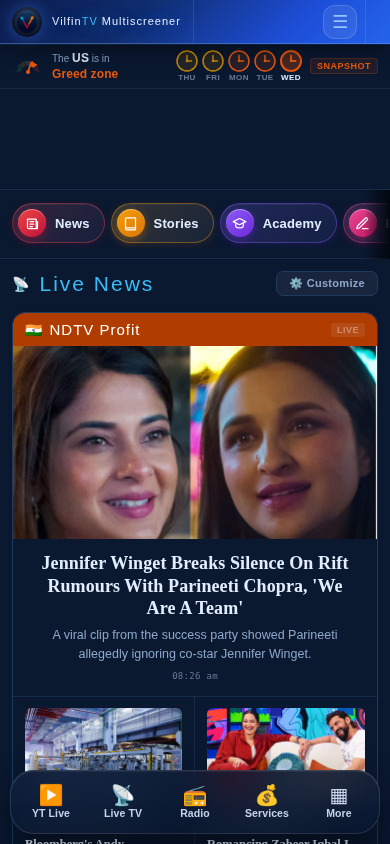
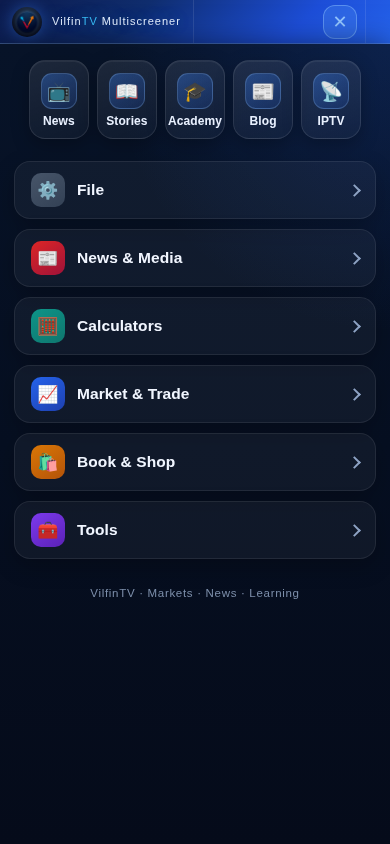
Home and its mobile menu, captured at 390px on 28 October 2026. Embedded news and market content changes independently of the design.
Live TV gets country chips. Radio gets room to breathe.
Tap Live TV for the channel directory; tap YT Live for the separate YouTube live-channel panel. They are different routes, not two names for the same player.
Live TV’s mobile panel now has a rounded search field, swipeable country chips and a More countries sheet with its own search. Channel rows show a logo, country/category information, and an HD badge where listed. Favorites and presets help narrow the list. A saved country can guide later visits.
The scrolling layout keeps browsing practical while the player stays at the top. Playback is designed to start muted on a new page load, retain your sound choice across channel changes in that visit, and stop when you close the mobile panel or switch to another media panel. Browser permissions, stream availability and device support still affect the experience; a directory entry is not a guarantee that a channel will play in every country.
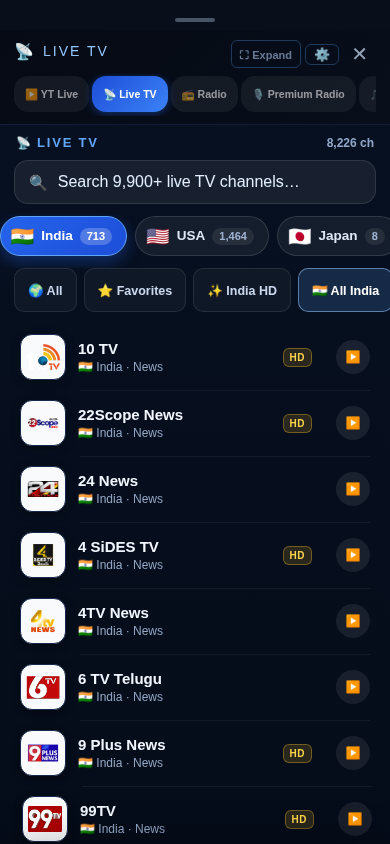
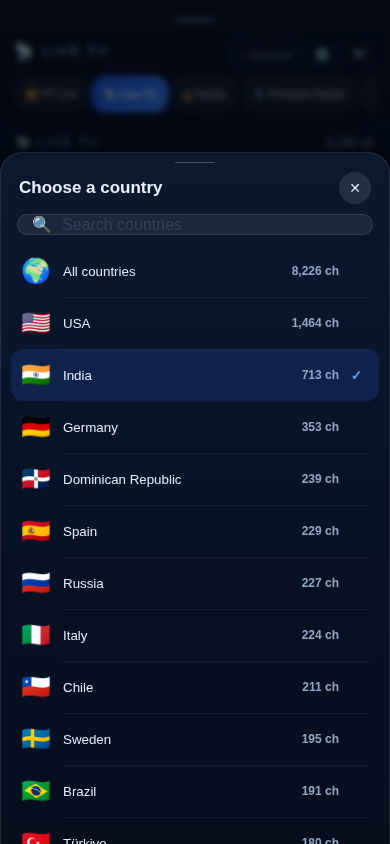
Live TV’s channel browser and country picker. Actual screenshots, 28 October 2026; listings and availability can change.
Radio is also inside Home: a larger player brings play, skip, sound and volume controls together, with station search, Favorites, Recently played and language/region presets underneath. The presets include Malayalam, Hindi, Gulf/NRI listening and other regions. These are browsing options, not promises that every listed stream is available.
Sooraj tapped Malayalam. “Finally, a selection process where I am allowed to choose by mood.”
Pooja pointed at his fund tab. “Keep that rule inside Radio.”
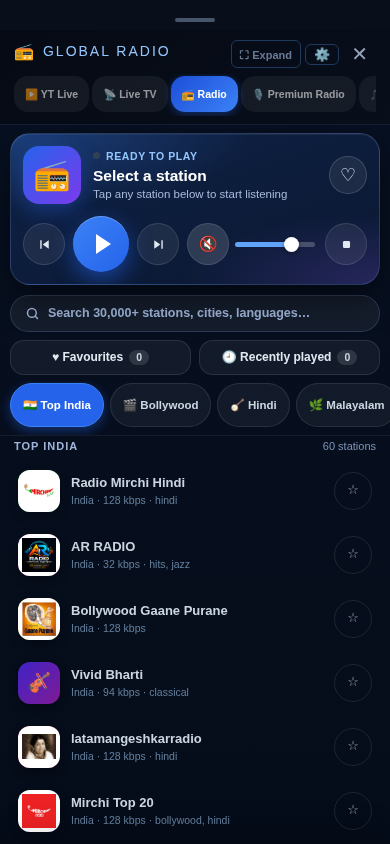
Radio’s mobile listening desk. Actual screenshot, 28 October 2026; no audio-playback guarantee is implied.
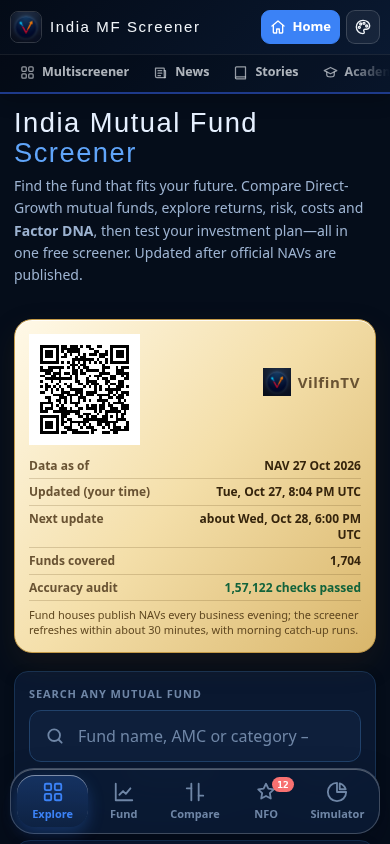
On a 390px viewport: the data date, fund coverage and navigation stay within reach. Actual page screenshot, 28 October 2026.
“Can you make my losses look smaller?” Rahul asked.
“I can improve the typography,” Arun said. “For the losses, speak to the market.”
The wider site gives readers several doors into the same learning journey:
| Your next question | Where to go |
|---|---|
| What happened? | News, with breaking and regional coverage. |
| Why does it matter? | Blog Intelligence Hub, with searchable topics and source links. |
| Can someone explain this from the beginning? | Academy, covering finance, economics, programming, AI and more. |
| Can I read something without a price chart? | Stories, with genre browsing and a featured detective mystery. |
| How do these investments compare? | The MF, India ETF and US & Global ETF screeners. |
These are features visible now; this is not a claim that every one launched after the previous article. Some were already introduced last week. The difference here is how they connect into a practical tour.
Stories, Blog and Academy: three different reasons to stay
Govind, who manages Stories, prefers suspense with an ending. The library groups fiction by genre, offers sorting and themes, and opens a dedicated reading page. On mobile, the reader puts Library, Chapters, text size, Top and Next within thumb’s reach. Chapter and reading-time labels help readers judge the commitment before starting.
“A missing watch,” Rahul read from the featured mystery. “At last, a loss we can investigate.”
“Without blaming the Federal Reserve,” Govind said.
The Blog Intelligence Hub serves a different purpose: searchable update cards across markets, technology, taxation, regulation, health, energy, entertainment and regional coverage. Search by topic, company or regulator, or choose a category. Source labels and Reference link buttons let you follow the underlying report instead of treating a short summary as the whole investigation. Article counts depend on the loaded feed and selected category.
Midhun opened Academy. The course library spans school subjects, languages, economics, programming, AI and practical skills. The Finance & Capital Markets course, for example, opens a 40-lesson outline with plain-language explanations, examples, practice questions, progress and Previous/Next navigation. The mobile bar keeps Home, Courses, News, Screener and Menu nearby.
“Start with one lesson,” Midhun said. “Nobody needs to learn the entire economy before lunch.”
“Good,” Rahul said. “I have already scheduled lunch.”

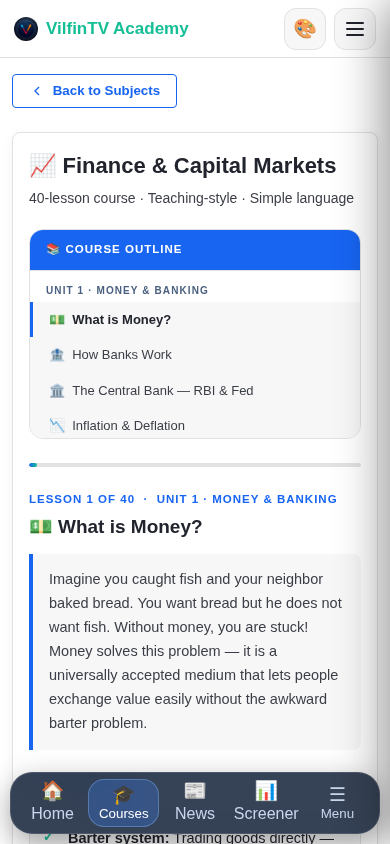
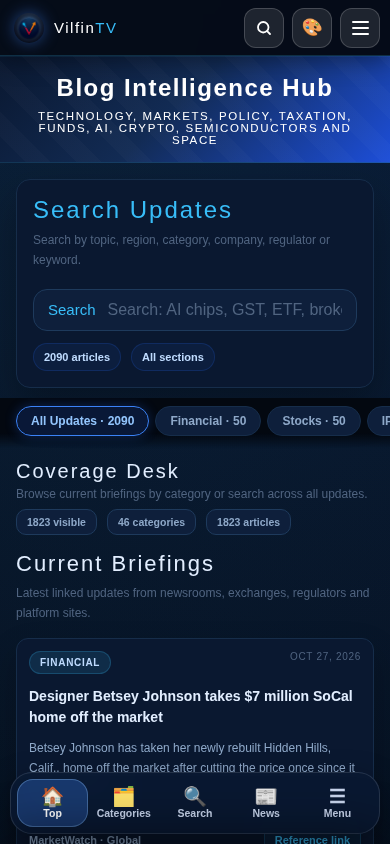
Read for the mystery; stay for the explanation. Actual Stories reader, Academy lesson and Blog screenshots, 28 October 2026. The gallery below also shows the libraries.
The filters have one job: reduce the crowd
Pooja opened the mutual-fund screener.
“Imagine walking into a supermarket,” she said, “and every shelf says ‘Best Product.’ That is what choosing a fund by last year’s return feels like.”
“I usually choose the one with the nicest packet,” Sooraj admitted.
“Exactly why we’re having this meeting.”
Start with a category and fund house, then examine returns, risk, costs and investment availability. Check whether a fund accepts fresh money or SIPs before getting attached to it. An attractive chart is not much help if the purchase route is paused.
On the ETF pages, the available filters help narrow the universe by characteristics such as role, trend, issuer, liquidity and cost. The US & Global page now advertises 250+ US-listed ETFs, compared with the 175 reported in the previous story. That is a broader advertised universe, not a promise that every ETF has every data field available.
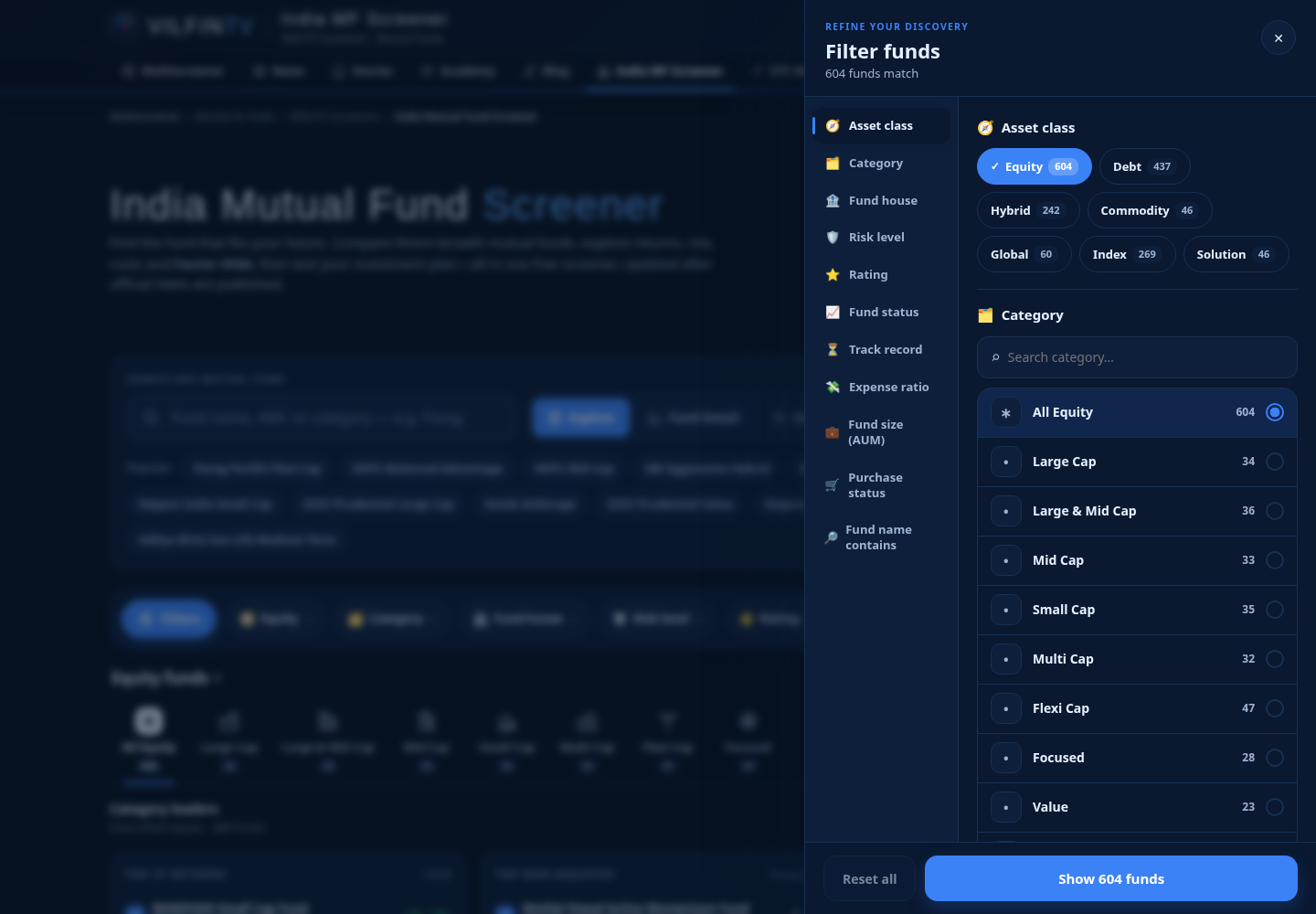
Less hunting, more comparing: the MF filter drawer groups the questions in one place. Actual page screenshot, 28 October 2026.
The new fund details ask more than “How much did it make?”
Open a fund to move through Overview, Returns, SIP, Rolling Returns, Risk & Ratios, Factor DNA, Portfolio, Peers and Fund Info. The details bring the NAV date, costs, minimum purchases, scheme documents and Riskometer closer to the performance discussion.
The Fund health panel breaks the review into performance, risk and protection, cost, composition, strengths and red flags. Expand a row for the evidence and category comparison. The wider rating breakdown also separates returns, consistency, downside protection and cost instead of hiding everything behind one star rating.
There is a crucial beginner’s distinction: a “Low” risk/protection label in this relative health view does not mean SEBI’s “Low Risk” grade. The example we inspected, Parag Parikh Flexi Cap, displayed Very High Risk on its scheme Riskometer. “Calmer than peers” can still mean substantial equity losses.
“A quiet tiger,” Aishwarya said, “is still a tiger.”
For returns, the NAV chart is not a live intraday stock chart. SIP XIRR accounts for contribution timing; rolling returns compare many holding periods rather than one lucky start date. Factor DNA describes observed style, while portfolio and peer views help you see concentration and compare like with like. Missing verified history stays unavailable—it should not be imagined into existence.
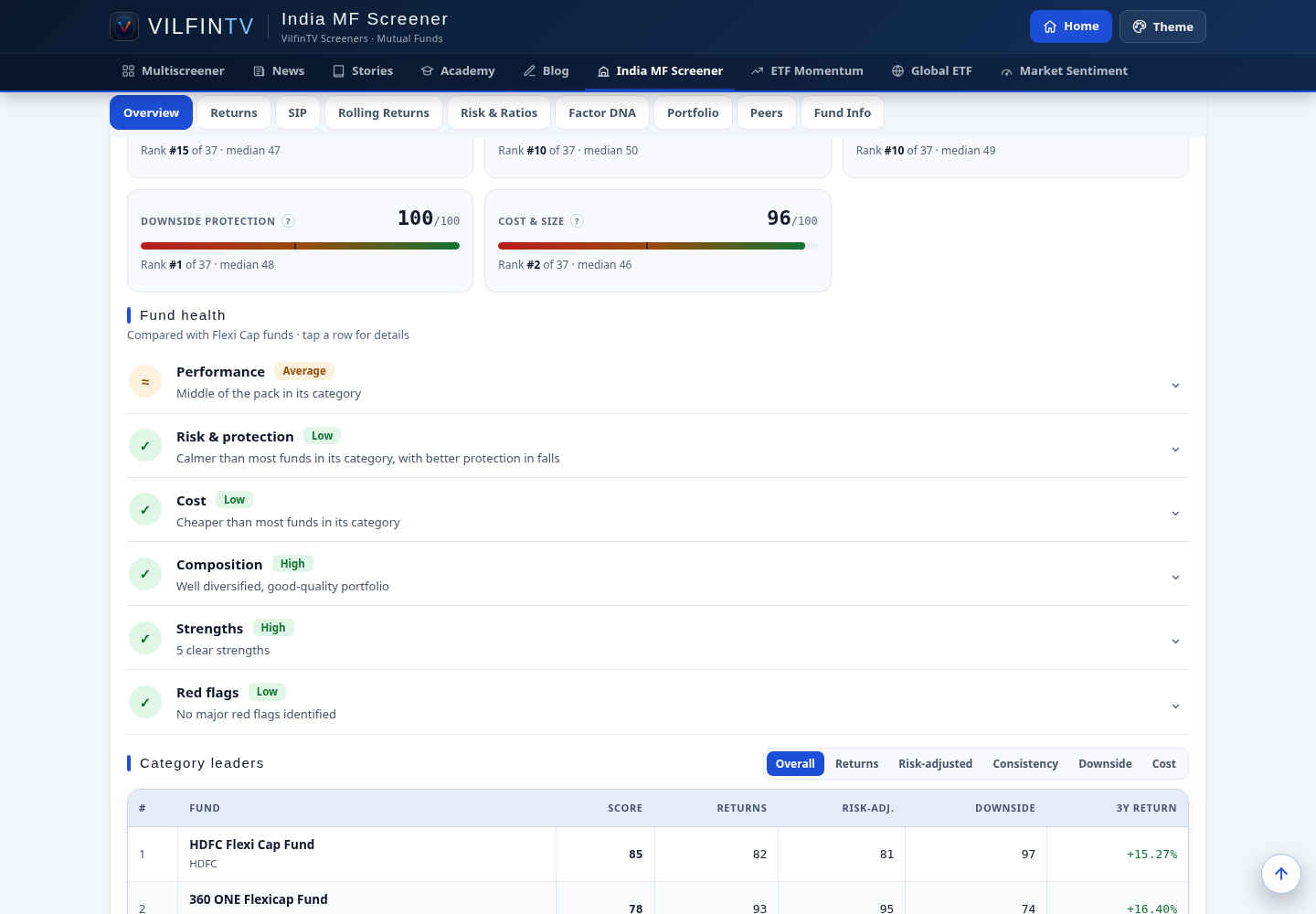
A fund’s relative strengths are not a safety guarantee. Actual fund-detail screenshot, 28 October 2026; shown as a product example, not a recommendation.
For a beginner, try this order: choose the exposure you want to learn about, narrow the list, compare similar products, then open the detail view. Check costs and risk before celebrating the return column.
One label deserves a translation: “Accelerating” describes relative strength against the chosen benchmark. It does not mean the price must rise tomorrow. An ETF can look stronger than a falling benchmark while still losing money.
“So first place in a slow race can still be slow?” Midhun asked.
“Exactly,” Rohith said.
“Finally. My school sports record has financial context.”
The US folios get a bigger stage—and stricter receipts
Abhinav brought up the global simulator. An ETF, he explained, is a basket of investments that trades on an exchange. A folio is simply the account or portfolio record you follow.
The US & Global page combines rotation views, investment comparisons, a model portfolio and 20 active educational Simulator Buy accounts, with hypothetical purchases recorded from 20 October 2026. They are separate from the rupee accounts on the Indian pages.
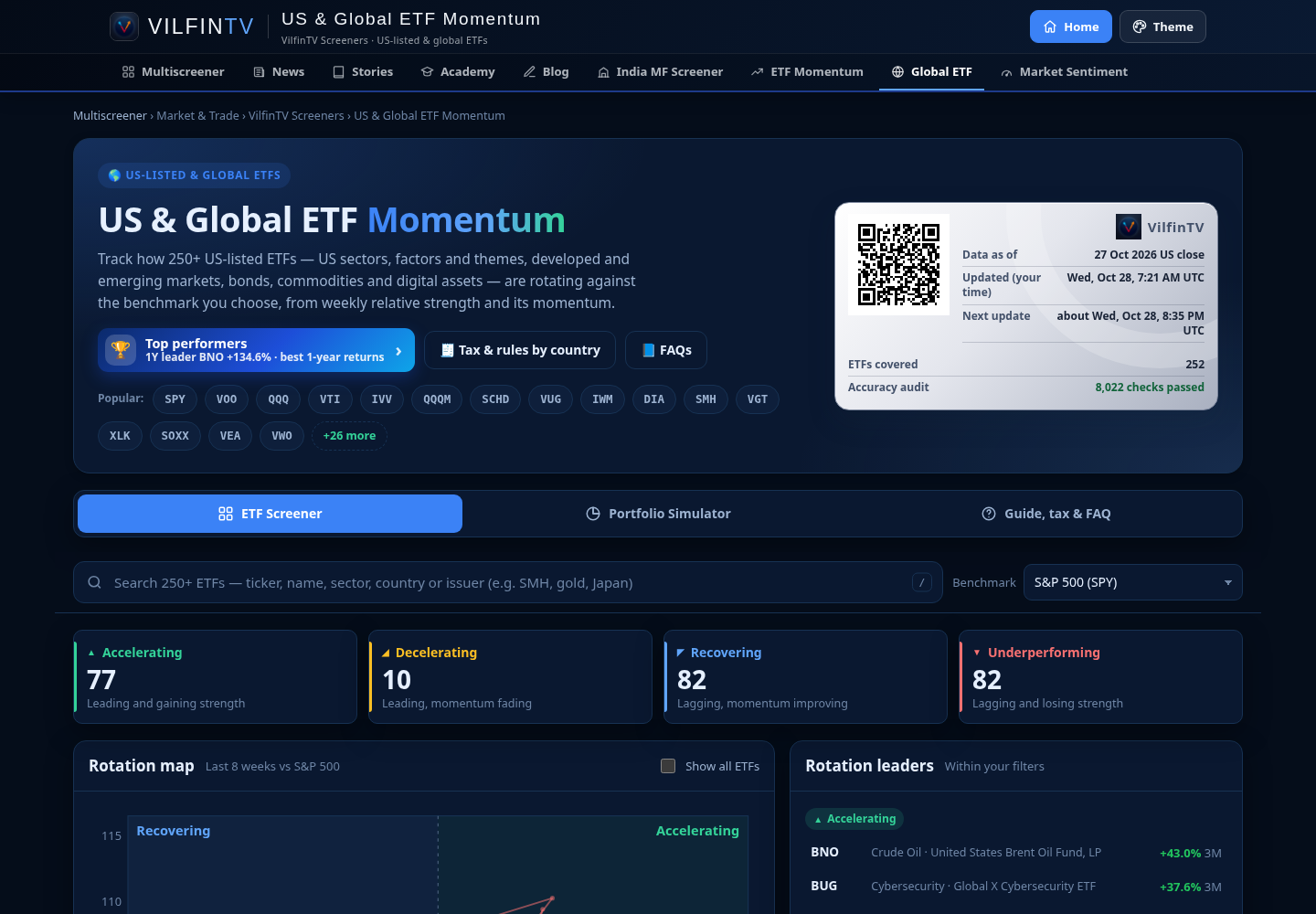
A wider window: the redesigned US & Global screener. Actual page screenshot, 28 October 2026; prices and counts are a dated snapshot.
“International expansion,” Sanal announced.
“International accounting,” Vishnu corrected, already opening the order book.
The most useful changes are behind the headline numbers:
- The order record tells a fuller story. Check the recorded session, price, model costs and instruction. A simulated closing price is not a guaranteed fill from a real broker.
- A declared dividend is not immediately spendable cash. From 26 October, declared net distributions remain receivables until a verified published payable date permits a model cash credit. Earlier records retain their disclosed legacy treatment. Think “money expected” versus “money available.”
- A dip does not create free money. Optional global dip purchases require two completed daily closes, a fresh eligible price in the next regular US session, and existing unallocated model cash in dollars. If the checks or cash fail, the model skips the purchase.
- A replacement is not an invented sale. The global strategy directs new model money to the replacement ETF while retaining earlier holdings.
Nithin leaned forward. “So we cannot spend a dividend just because it has been announced?”
“Correct,” Vishnu said.
Rahul quietly crossed out a line on his snack budget.
The global guide also explains access and country-specific rules. US listing does not remove currency risk, remittance costs, dividend withholding or reporting obligations. Tax residence matters; nationality alone does not settle the answer.
And here comes the new cliffhanger: three additional global folios are scheduled to begin on 29 October. Their public records, updated 28 October, show no executed orders or return history yet. The older general FAQ still says there is no active John global folio; the new record describes a scheduled start, not a completed purchase.
| New folio | Planned budget | The idea—and the catch |
|---|---|---|
| John · Super Aggressive Global | US$500 monthly | Growth and semiconductor exposure, momentum-based rotation and a trend shield. Defensive rules can redirect allocations, but cannot guarantee protection. |
| Nagasawa · NISA Growth | ¥100,000 monthly | A Japan-resident model combining growth, technology, emerging markets and gold, with a seven-year minimum horizon. NISA is an account tax framework, not a low-risk investment. |
| Gilbert · Growth with Tax-Loss Harvesting | US$500 monthly | A concentrated US growth model with semiconductor, technology and value sleeves, plus rules for realising eligible simulated losses. Tax-loss harvesting is not a refund on demand. |



The three new folio cards, captured 28 October 2026. “Starts 29 Oct” is a schedule, not an executed order or performance record.
Nagasawa’s published target mix puts 25% in gold; the rest spans Nasdaq-100, semiconductors, US technology and emerging markets. Overlapping technology exposure still creates concentration risk. Gilbert’s harvesting model checks both percentage and dollar losses and a 30-day wash-sale constraint. Different-index ETF pairs do not, by themselves, establish that a real investor meets every tax rule.
Those details matter because a strategy built for a US taxable account cannot simply be copied into Japan’s NISA or an Indian account. NISA losses generally cannot offset taxable-account gains; US withholding can still apply to US-ETF dividends. These are educational account assumptions, not advice to open or copy a folio.
“My seven-year plan is still seven years,” John reminded the room.
“So we can stop reviewing it every seven minutes?” Fathima asked.
Two new chairs, and a much clearer job board
Meet Nagasawa, the Japan Markets Analyst from Tokyo, and Gilbert, the US Markets Analyst from Boston, Massachusetts. The public international-desk profiles identify Japanese and English as their respective native languages and describe the desk as joining in October 2026. Their new folios give readers two different account settings to learn from.
In our newsroom scene, they reach the meeting just as Rahul is explaining why the tea budget needs a benchmark.
“I brought the NISA notes,” Nagasawa says.
“I brought the US tax rules,” Gilbert adds.
Rahul looks at their folders. “I was hoping one of you brought biscuits.”
“First-day advice,” Sooraj says. “If someone says ‘quick review,’ bring a charger.”
Arjun points to the new responsibility board. The newsroom has moved beyond everybody doing a little of everything: pages have owners, numbers have reviewers, and somebody must explain why a feature exists before asking Arun to draw another button.
The current public Indian and global folio records identify these responsibilities:
Meet the desks: who does what now?
| Agent | Current responsibility |
|---|---|
| Arjun | Project Manager — roadmap, assignments and page delivery. |
| Aswin | News Page Manager — coverage and editorial standards. |
| Sooraj | Internal Content Creator — English and Malayalam articles and explainers. |
| Midhun | Academy Page Manager — courses, lessons and learning paths. |
| Govind | Stories Page Manager — stories, cover art and reading levels. |
| Vishnu | Financial Auditor — independent checks of ledgers and screener data. |
| Arun | Site Designer — themes, layouts, illustrations and the design system. |
| Sreeram | Security & Compliance Officer — security, privacy and regulatory wording. |
| Nithin | Ledger Manager — Simulator Buy records and backups. |
| Sanal | Marketing & Growth Manager — reach, promotion and partner programmes. |
| Rahul | Home & Market Sentiment Page Manager — including Live TV and radio. |
| Vimal | Operator — servers, delivery and scheduled data runs. |
| Aishwarya | Financial Advisor character — investor education and simulator guidance; this is not a claim of SEBI registration. |
| Pooja | MF Screener Page Manager — fund data, checks and features. |
| Fathima | Planning Officer — priorities and the release calendar. |
| Teressa | Research Analyst — markets, valuations and economy checks. |
| Abhinav | Global ETF Page Manager — the global page and US coverage. |
| Rohith | ETF Momentum Page Manager — India ETF modes, trends and data checks. |
| Jithin | Risk Manager — drawdowns, portfolio risk and dip rules. |
| Akhil | Data Analyst — research, analytics and data quality. |
| John | Portfolio Manager — Ultimate Indian folios and the scheduled super-aggressive global folio. |
| Nagasawa | Japan Markets Analyst — NISA growth folio and its seven-year goal. |
| Gilbert | US Markets Analyst — concentrated growth and tax-loss-harvesting folio. |
Sources: Indian scoreboard dated 27 October and new global folio scoreboards dated 28 October 2026. Roles do not establish professional licensing or investment performance.
“Now everyone has a clear job,” Arjun said.
“Who predicts tomorrow?” Rahul asked.
Teressa turned the oil briefing towards him. “Nobody. That is the next lesson.”
Then oil entered the chat
The room’s mood changed here, because behind the price charts are people living through conflict. The jokes belong to our fictional office, not to the harm caused by war.
Reports dated 27 October described diplomatic efforts to ease the US–Iran conflict, alongside continuing risks to energy infrastructure and shipping. BusinessLine reported Brent around $115.80 a barrel during its market coverage; Oilprice’s report carried by Yahoo Finance also placed Brent near $115. These are dated observations, not live quotes. Different delivery contracts and observation times can show different prices.
The important plot twist: oil can fall a little on hopeful diplomatic news and still remain expensive enough to hurt.
Meanwhile, equity markets were telling different stories:
| Completed session: 27 October 2026 | Reported result |
|---|---|
| India · Nifty 50 | 22,749.75, down 0.02% — essentially flat. |
| US · S&P 500 | Up 0.60%. |
| US · Nasdaq Composite | Up 1.18%. |
Sources: BusinessLine’s India closing report and Economic Times’ US closing coverage. These are daily changes, not weekly returns. The US session finished later than India’s; the numbers are not simultaneous quotes or a completed 28 October session.
“So the world is not one giant red candle?” Rahul asked.
“Correct,” Teressa said. “Different economies. Different companies. Different expectations.”
“Very inconsiderate of them. I had prepared one sentence.”
If expensive oil and disruption persist, who feels it?
For India, which relies heavily on imported crude, the route from an overseas disruption to an everyday budget is fairly direct: a higher dollar oil bill, potentially more pressure on the rupee, and higher transport or input costs. Companies may absorb the cost in lower profit margins, pass it to customers, or do a little of both.
Here is a simple illustration, not a price forecast: if dollar oil costs rise 20% and each dollar costs 5% more rupees, the rupee cost rises about 26% (1.20 × 1.05 − 1), before freight, taxes and other changes. The two pressures compound; they do not politely take turns.
Airlines, transport operators, paint and chemical businesses can face pressure. Upstream oil producers may benefit from higher selling prices, but production, regulation and taxes still matter. Refiners are not automatic winners: crude costs, refining margins and domestic pricing policy can pull in different directions.
Households may feel the effect in travel, deliveries and the prices of goods. Pump prices do not move one-for-one with Brent: taxes, subsidies, inventories and company decisions affect the timing. Persistent inflation could also give the RBI less room to ease interest rates, while weaker growth could pull policy the other way.
The US produces substantial oil, but American consumers still buy fuel priced in a global market. Energy producers may gain while households and fuel-heavy businesses pay more. If energy inflation remains stubborn, the Federal Reserve may have less room to cut rates than investors hope. Higher bond yields can also pressure the valuations of growth stocks.
Sustained disruption can do more than raise prices: it can delay shipments, increase insurance and freight costs, and make businesses postpone investment. That combination—slower growth with higher prices—is the uncomfortable risk often called stagflation. It is a scenario to monitor, not a declaration that it must happen.
India and US: what would change the outlook?
| Scenario | India: what to watch | US: what to watch |
|---|---|---|
| Durable de-escalation and safer shipping | Easing import costs and rupee pressure could help margins and sentiment. Earnings and valuations still matter. | Easing energy inflation could support confidence and rate expectations. Profits must still justify prices. |
| A prolonged, costly stalemate | Oil, the rupee, foreign flows and domestic demand may keep markets uneven. Sector differences become important. | Energy costs compete with earnings growth; Fed guidance and bond yields remain influential. |
| A material supply interruption or wider conflict | Greater import, inflation and currency stress could hurt earnings and increase volatility. | Inflation and growth risks could rise together; energy-stock gains would not protect the whole market. |
These are conditional expectations, not index targets. A good outcome can disappoint markets if prices already assume it; a bad headline can have less impact if investors expected worse.
“Can we add a filter for ‘market behaves sensibly’?” Sooraj asked.
Rohith considered it. “We would return zero results.”
The last surprise is a button you do not press
By the end of the meeting, the team had better screens, clearer roles and a longer watchlist. The market had provided no written guarantee about anything.
For a first visit, keep it simple: pick one screener, narrow one category, compare two similar investments, then open a simulated account and inspect its history. Check the date, costs and benchmark before checking who is “winning.” A few sessions cannot establish skill, and a larger contribution can lift account value without improving the return.
For real money, start with your emergency needs, time horizon and ability to bear losses. A simulated dip rule is not a personal instruction to buy during a war. Money needed soon should not depend on an equity-market recovery arriving on schedule.
Rahul looked down at his phone one last time.
“New design. Smarter filters. Global folios. A team with a job board. And I still cannot control tomorrow.”
“Now you understand the product,” Aishwarya said.
John closed his folder. “Meeting over.”
From the doorway came the only question everyone was ready to answer:
“Who ordered chai?”
For once, the room reached unanimous consensus.
Sources and reader disclosures
More real screenshots: simulator, mobile global view, Stories, Academy and Blog
Blog on mobile: search first, then choose a coverage category.
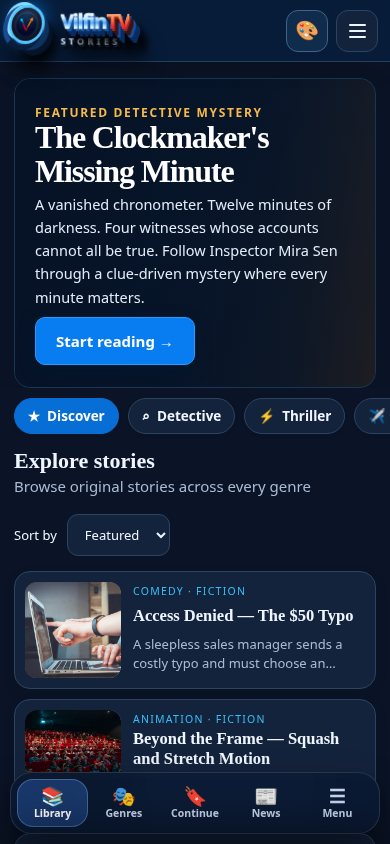
Stories library on mobile.
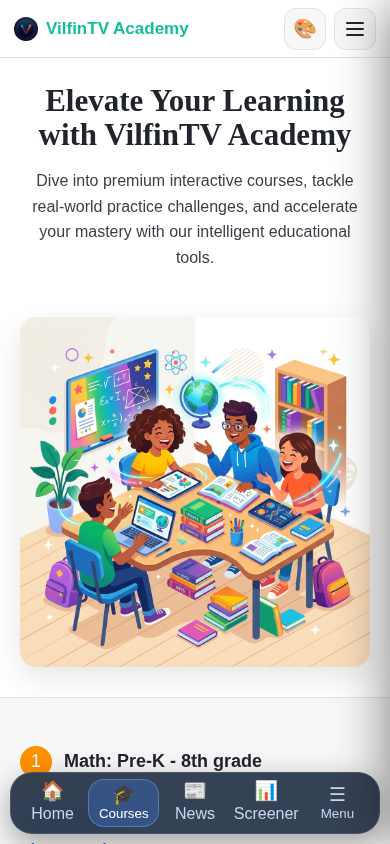
Academy subjects on mobile.
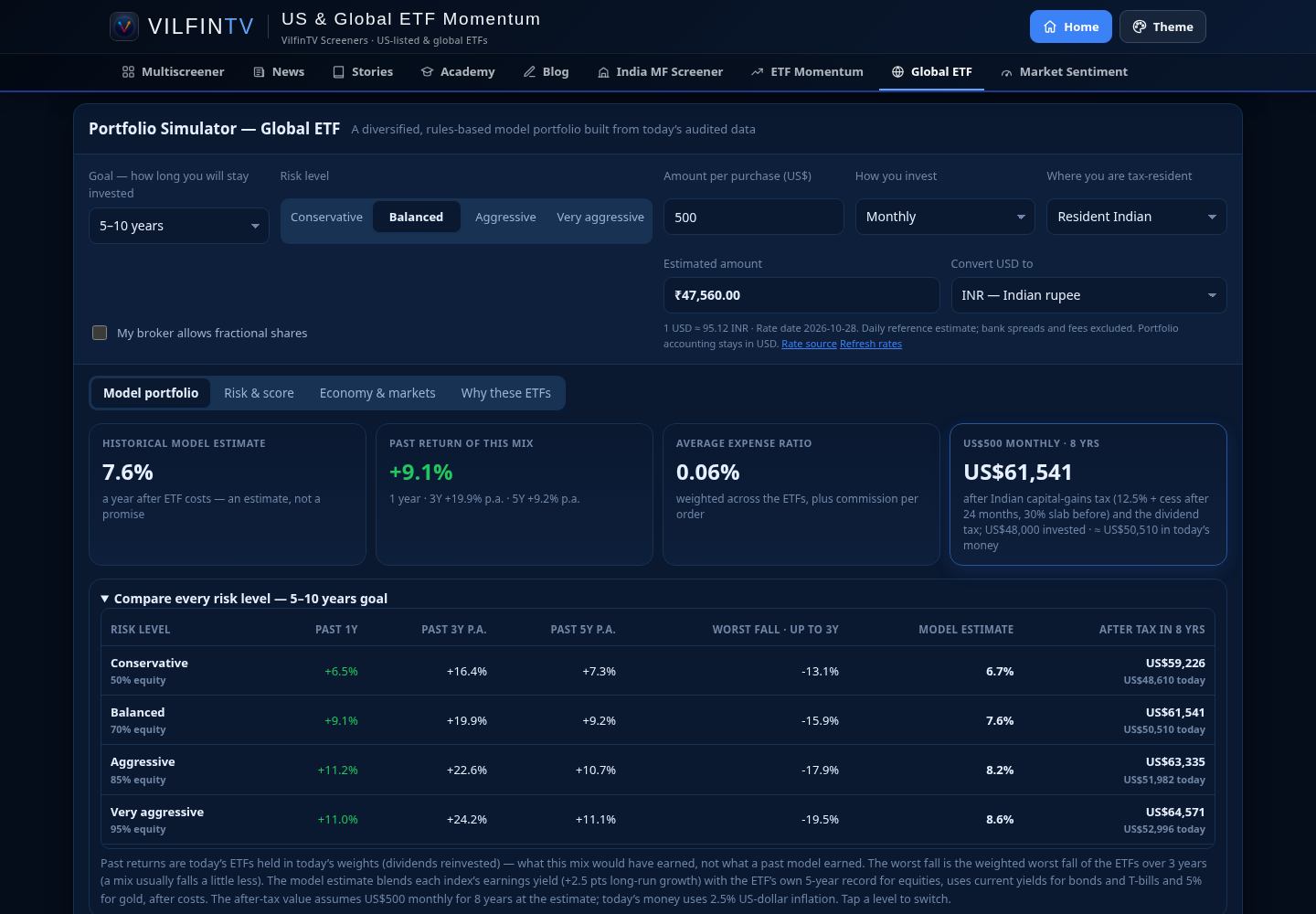
Global Simulator: model estimates and historical illustrations are distinct from account performance.
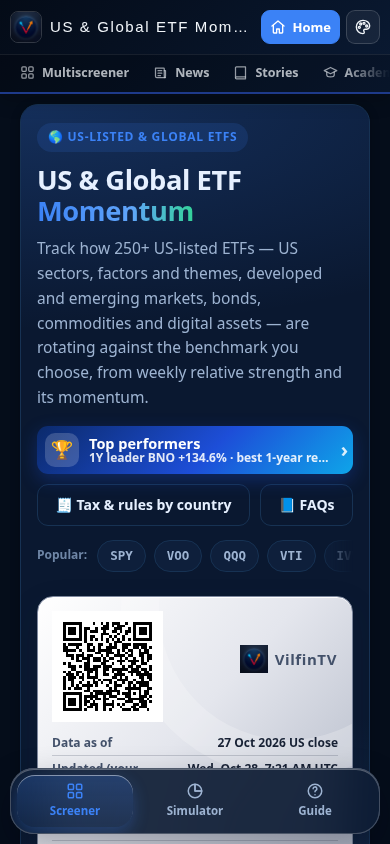
US & Global ETF screen on mobile.
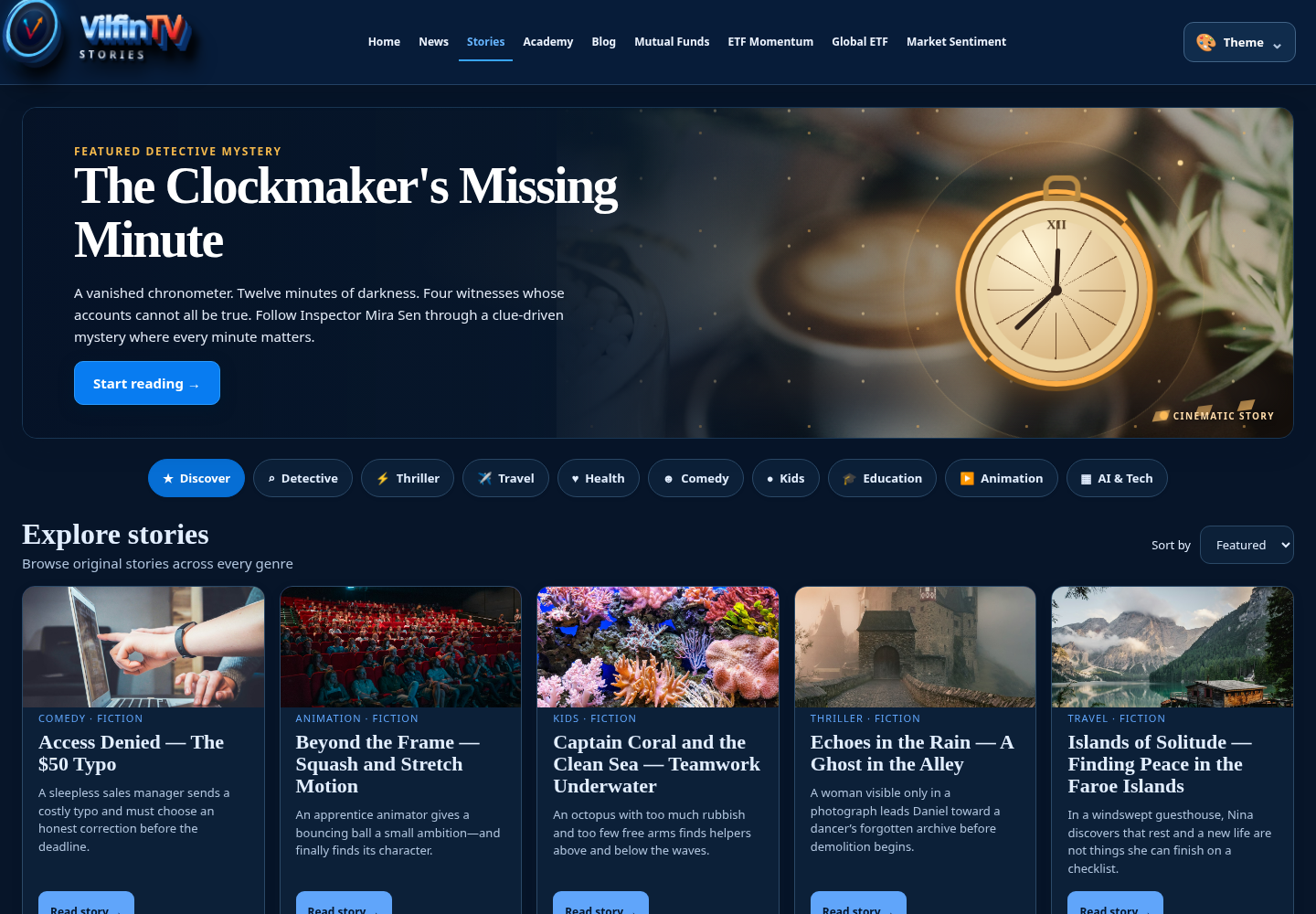
Stories: a different reading pace after the market briefing.
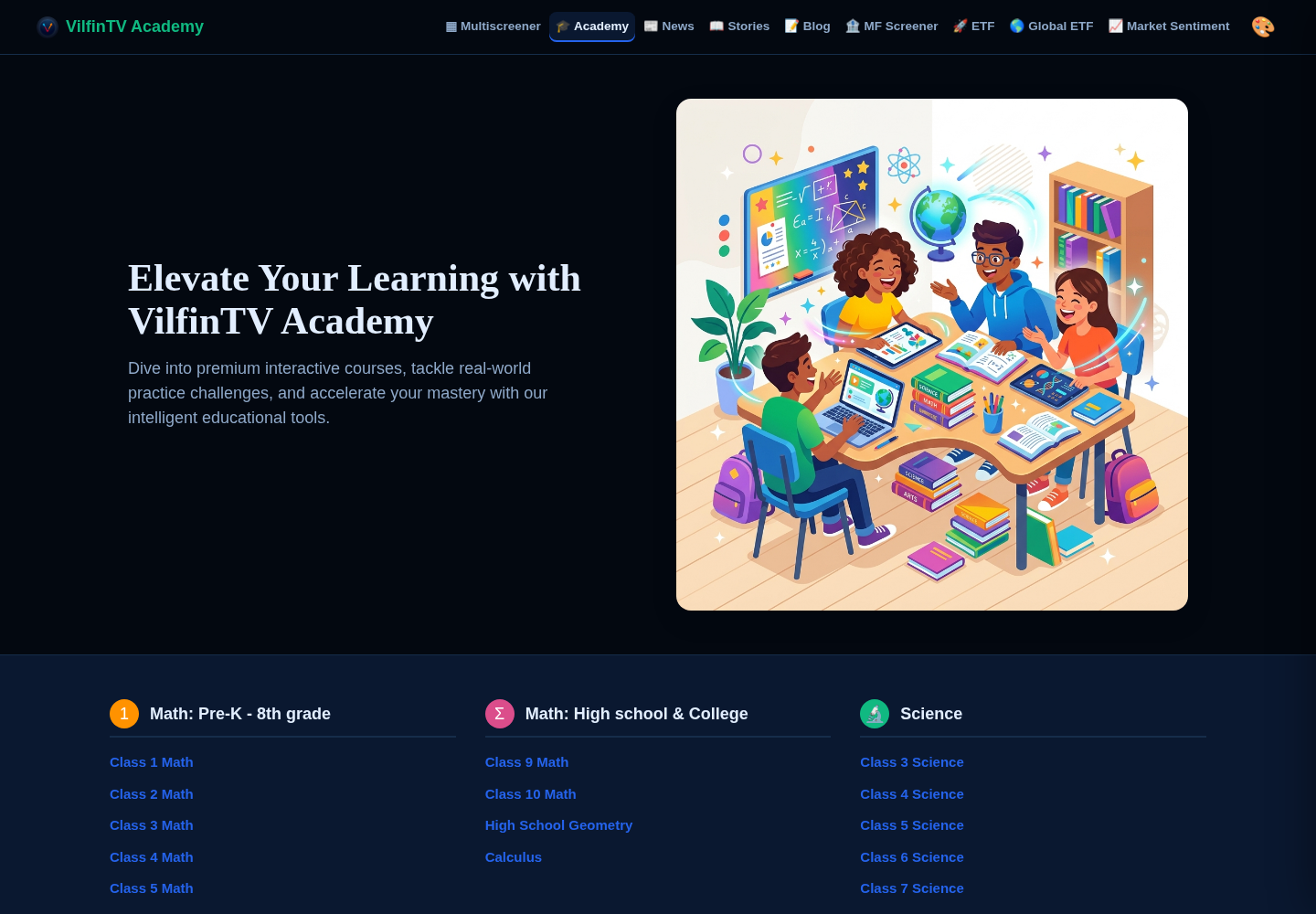
Academy: lessons for readers who want the foundations.
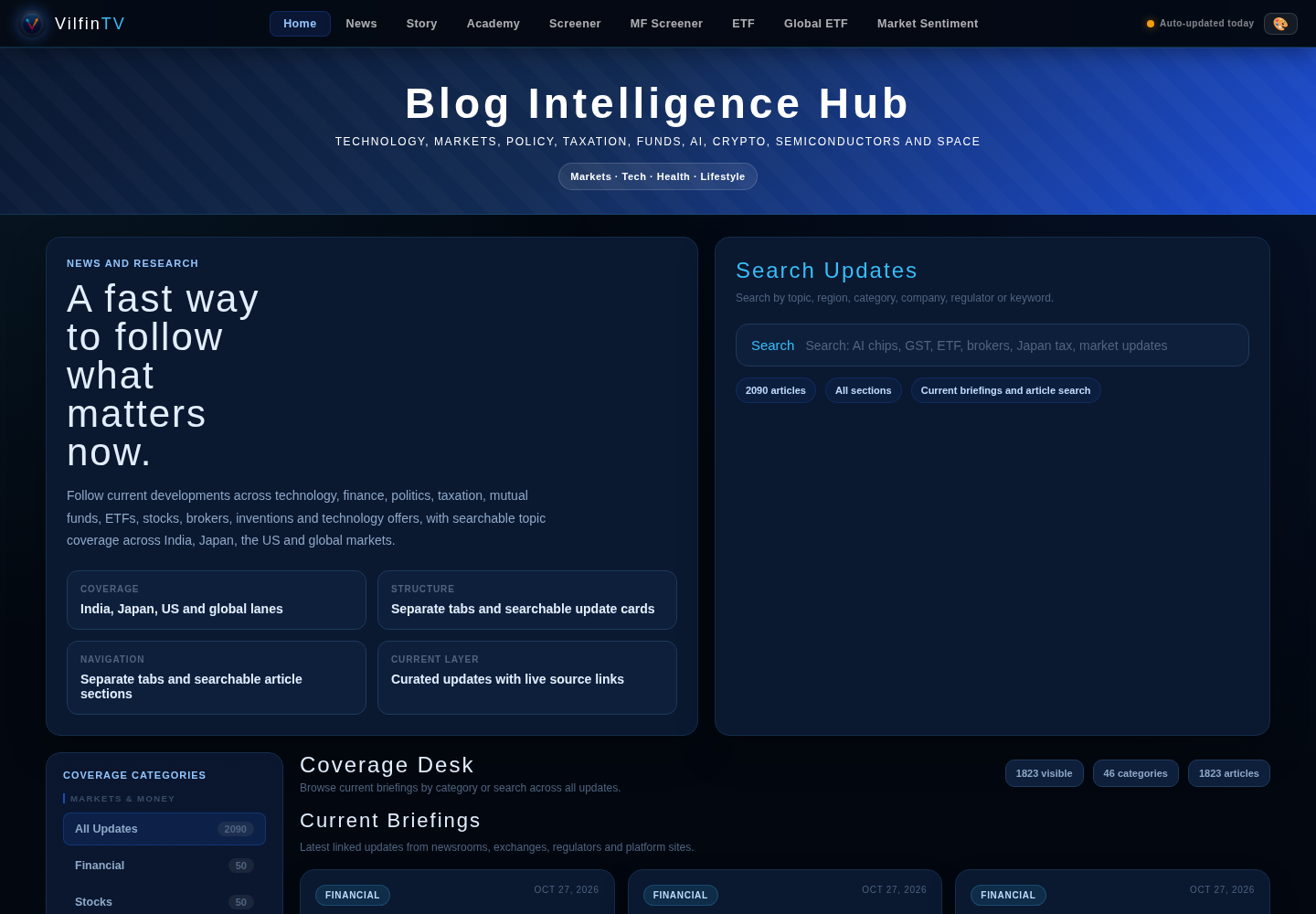
Blog Intelligence Hub: search and explore source-linked updates. All screenshots captured 28 October 2026.
Product pages checked on 28 October 2026: India MF Screener, India ETF Momentum, US & Global ETF Momentum, Stories, Academy, Blog, and the public role/account scoreboard dated 27 October. New global records dated 28 October: John, Nagasawa, Gilbert; role profiles: NISA scoreboard and US growth scoreboard. Current pages establish visible features, not their precise release dates. Some public FAQ wording and scoreboard values update on different schedules.
Additional product checks: Home and its Live TV/Radio panels, example fund-detail page, and the featured Stories reader. Screenshots show actual interfaces in the capture browser; embedded media and third-party streams may not load there, and font rendering can differ by device. No claim is made that every listed channel or station was played.
Market sources: BusinessLine, India closing coverage, 27 October; Economic Times, US closing coverage for 27 October; Oilprice via Yahoo Finance, 27 October. The scenario discussion explains economic channels; it is not a measured forecast of GDP, inflation or index returns. Refresh market facts before publication.
Educational and simulation disclaimer: VilfinTV’s character accounts do not deposit money, hold securities for readers or send trades to brokers. Model returns, targets, historical illustrations and estimated tax outcomes are not promises. Mutual funds, ETFs and stocks can lose value; diversification cannot eliminate losses. Foreign investments add currency, access, cost and tax risks. VilfinTV states that it is not a SEBI-registered investment adviser; job titles in the fictional cast do not create a licensed advisory relationship. This article is general education, not personalised investment, tax or legal advice. Read current scheme documents and consult an appropriately qualified professional for your situation.
Creative and referral disclosure: newsroom dialogue and actions are fictional editorial writing. The hero is an AI-generated illustration; product screenshots are actual page captures with their capture date. Some partner links on VilfinTV may be referral links that support running costs; check provider terms. Inclusion is not an investment recommendation.
- 🟢 Zerodha (India)
- 🔥 Dhan (India + US)
- 💹 ProStocks (Flat-fee)
- 🌐 Interactive Brokers (Global)
- 🚀 Kuvera (Mutual Funds)
Disclaimer: Mutual fund and stock market investments are subject to market risks. Please read all scheme-related documents carefully before investing. The information provided in this article is strictly for educational and informational purposes only. We are not SEBI registered investment advisors. Please conduct your own research or consult with a certified financial advisor before making any investment decisions based on your personal risk tolerance and financial goals.